 Written by Mark Bailey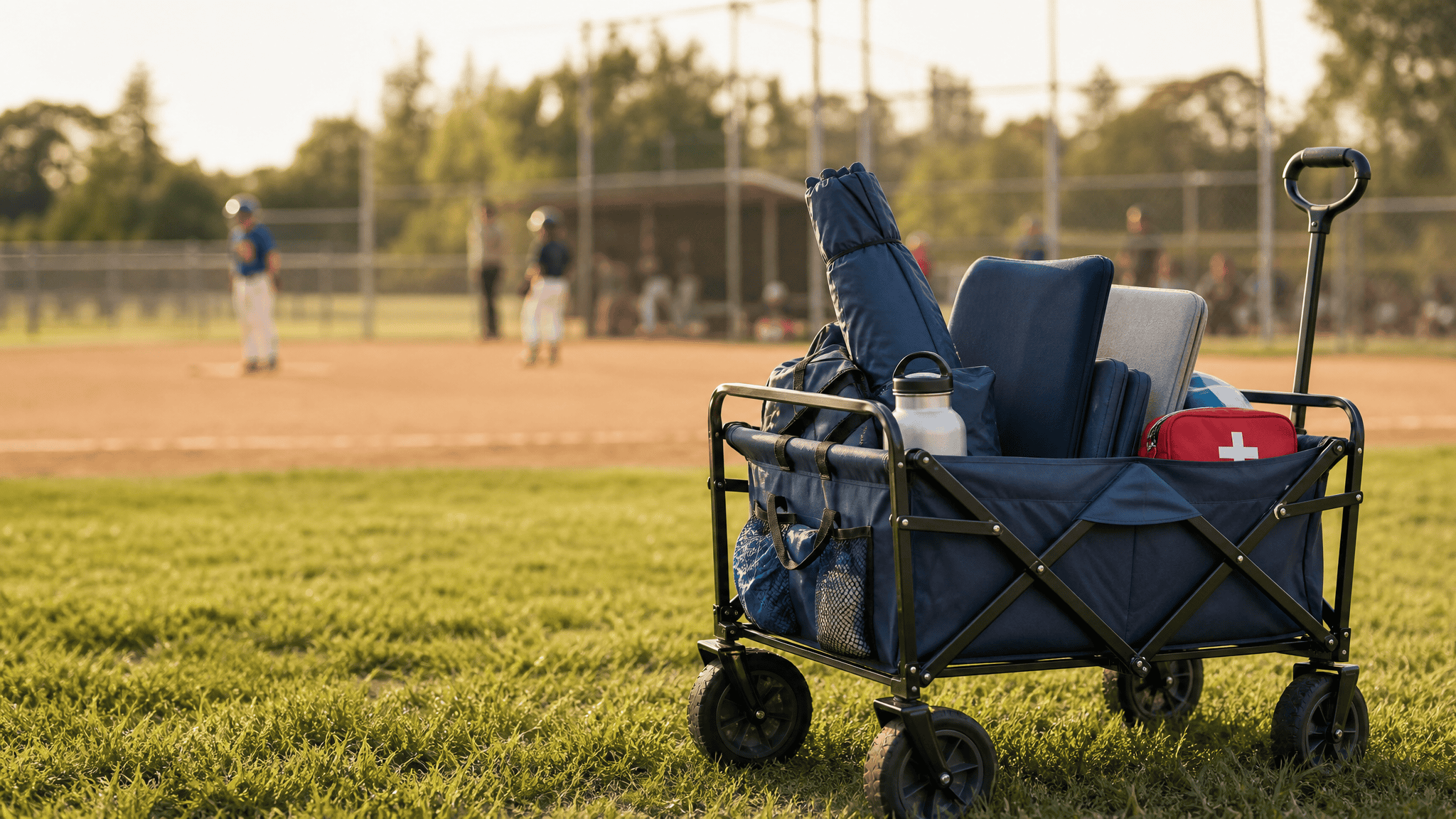
The first text I get most game mornings is one word: “Shade?”
That’s the whole language of baseball parenting right there. Not “what time is first pitch,” not “did you see the lineup.” Just shade, because we all learned the hard way that this sport eats entire days.
A single rec game runs long. Add extra innings, a doubleheader, or a full tournament weekend that starts before sunrise and doesn’t end until the field lights come on, and you’re not packing snacks for your kid anymore. You’re packing survival gear for yourself.
Here’s the thing nobody tells the rookie mom: the goal isn’t to bring everything. It’s to bring the right things, once, in a system you don’t have to rebuild every Saturday.
The veteran moms I know run what I think of as the 3-Bag Method. One bag is the player’s gear. One is the family comfort bag, chairs and shade and snacks. One is the small emergency bag that lives in the trunk and never gets unpacked, so it’s always there when someone’s bleeding or freezing or hangry.
Sort your stuff into those three and the chaos gets a lot quieter.
So here are the 25 things that actually earn a spot in those bags, grouped the way you’ll pack them.
Hauling and Shelter
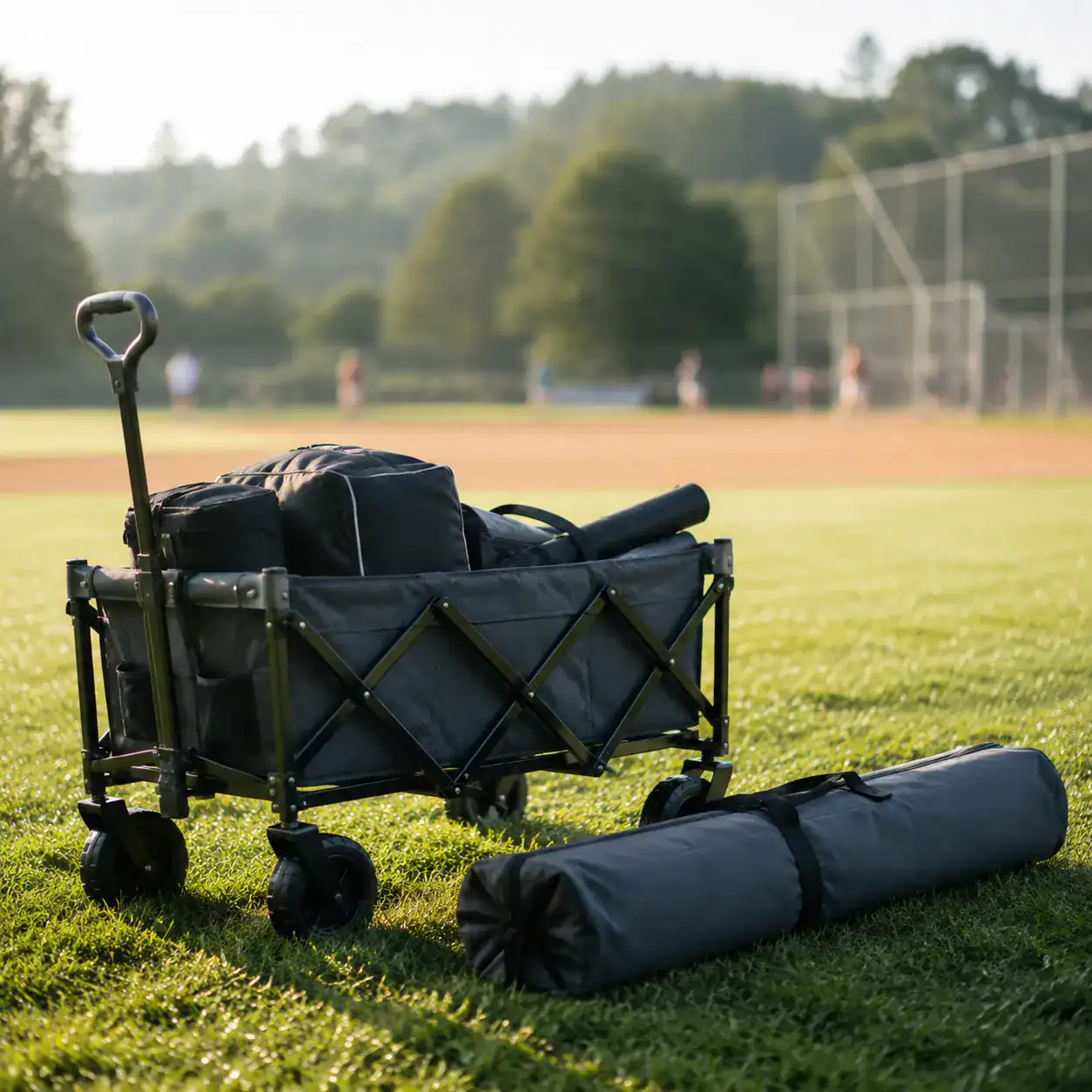
1. A collapsible folding wagon. If you buy one thing off this list, buy this. A wagon with brakes and big wheels (Mac Sports and Sekey are the ones I see everywhere) turns four sweaty trips from the car into one. It hauls the chairs, the cooler, the bag, and usually a tired kid on the way out. New parents always underestimate how much gear one game generates, and the wagon is the fix.
2. A pop-up canopy. The answer to “Shade?” Get a UV-rated, waterproof pop-up, ideally one that rolls on wheels so you’re not carrying it. Skip the fully-screened tents. They look cozy but they trap heat and turn into a sauna by noon.
Bring stakes or sandbags too, because the first gust of wind will send an unweighted canopy cartwheeling across the outfield.
3. A large mesh tote or dirty-gear bag. Somewhere to throw the cleats caked in red clay and the jersey that lost a fight with a slide. Keeping the filthy stuff separate keeps the rest of your bag livable.
Seating

4. A real chair with back support. The folding stadium chairs with actual lumbar support and a carry strap are worth it when you’re sitting for six hours. The rocking camp chairs with cup holders are the sideline flex, honestly. You will get comments. Wear it with pride.
5. A shade chair for when the canopy spot is gone. You know the fields. Ten families, three shady patches. A chair with a built-in UPF sunshade (GCI makes a good one) means you’re covered even when you show up to a packed lot.
6. A stadium seat cushion. For the bleacher-only fields where there’s nowhere to set up a chair. Aluminum benches at 2pm in July are their own kind of punishment. A cushion is small, cheap, and saves your back and your legs.
Sun and Bug Defense
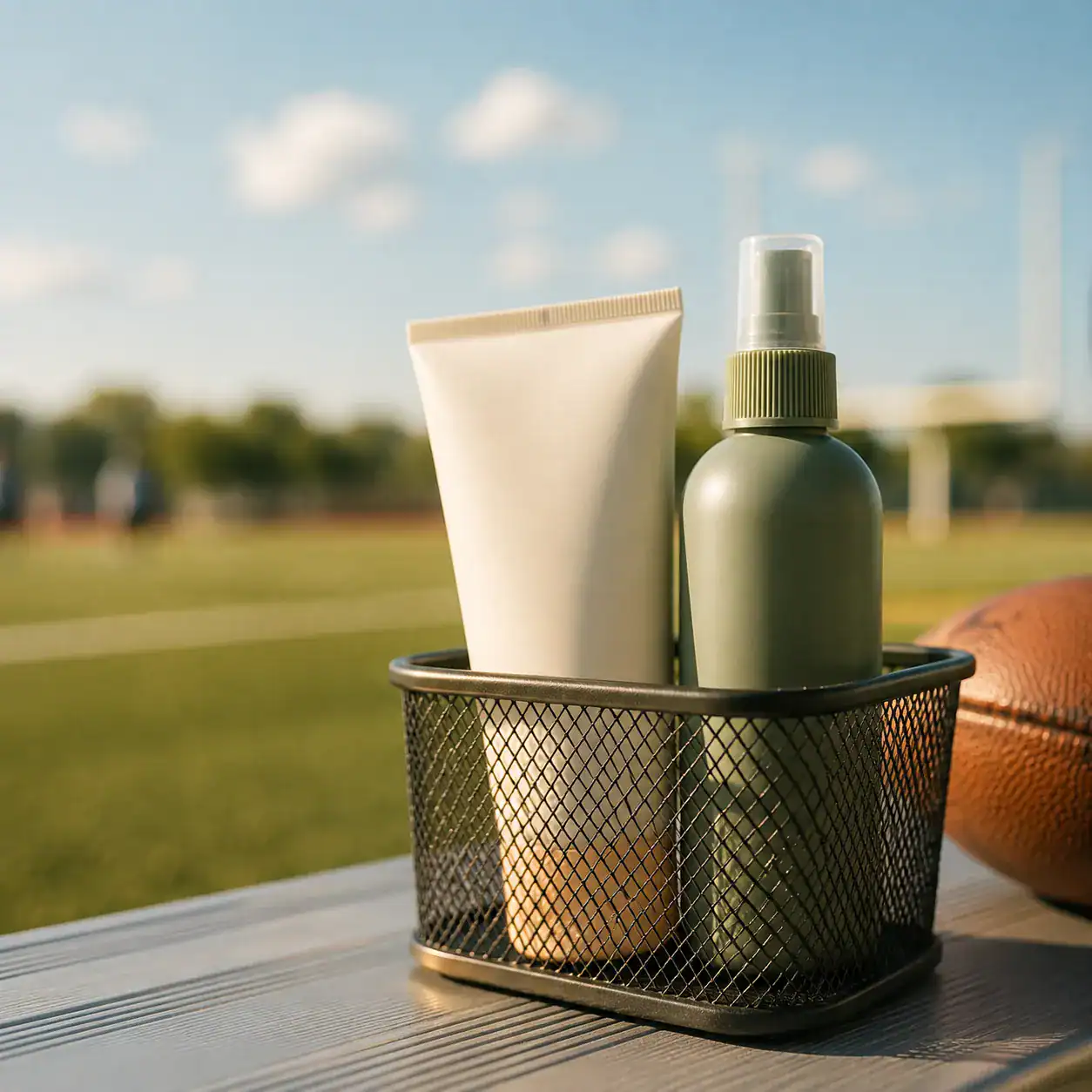
7. Sunscreen, SPF 30 to 50. Mineral or reef-safe formulas are easy on kid skin (Blue Lizard Sport and Neutrogena Beach Defense both show up on a lot of lists). Put it on before you leave the house, then reapply about every two hours. Sunscreen in the bag that never gets opened protects nobody.
8. A sunscreen stick for reapplication. Way easier to swipe on a squirming eight-year-old’s face between innings than wrestling with a bottle. Keep it in the pouch you can reach without digging.
9. A wide-brim hat and polarized sunglasses. For you. Squinting into an afternoon sky for three hours gives you a headache you’ll carry home. Polarized lenses also let you actually follow a fly ball instead of losing it in the glare.
10. Bug spray, and picaridin if it’s for the kids. The gnats and mosquitoes arrive the second the field lights flip on. Picaridin formulas (OFF! makes one, so does EarthKind) are the pediatrician-preferred pick for kids because they’re less harsh than DEET while still working. That’s one worth asking your pediatrician about if your kid has sensitive skin.
Hydration and Snacks

11. A big insulated water bottle or jug. Sixty-four ounces minimum, and bring your own. Never assume the field has a working fountain, because half of them don’t. Cold water on a hot metal bench is the difference between a good day and a miserable one.
12. A cooler sized to the day. A hard-sided cooler that actually holds ice (Yeti and Arctic Zone are the workhorses) for tournament weekends. A small soft roller cooler for a single game. Match it to how long you’ll be out so you’re not lugging a giant chest to a two-hour rec game.
13. Electrolyte packets. Hot-weather games ask a lot of little bodies. Tossing an electrolyte packet in the water bottle helps more than another juice box. Heat is a real risk in youth sports, not just a comfort thing. Kids heat up faster than adults do because they generate more body heat relative to their size and sweat less to shed it, per the American Academy of Pediatrics, so the smart move is to start hydrating an hour or two before first pitch, not once they’re already dragging.
14. Snacks that go beyond chips. Trail mix, sunflower seeds, protein and granola bars, beef jerky, a few pieces of fruit. Shelf-stable stuff that survives a hot dugout and actually refuels a kid instead of just crunching. You’ll feed half the team eventually. That’s the job.
15. Cash. Small bills. So many fields are cash-only for the gate, the parking, and the concession stand, and there’s no ATM for ten miles. Getting turned away at the gate because you only have a card is a rookie-year memory you only need once.
First Aid

16. A compact first aid kit. Band-Aids in a few sizes, antibiotic ointment, athletic tape and pre-wrap, blister pads. This lives in the emergency bag and stays stocked. You will be the mom other parents come find when their kid scrapes a knee.
17. Instant ice packs. The single-use kind you squeeze to activate. Your player is going to take a foul ball off the shin or come up sore, and it’s a when, not an if. Having a cold pack ready without a cooler run makes you look like a wizard.
18. Kids’ and adult pain reliever. Plus any prescription meds your kid needs on hand. Follow the package and your pediatrician on dosing, and don’t eyeball it. Long tournament days are exactly when a headache shows up.
Weather Swings

19. A packable poncho or umbrella. Baseball plays through a surprising amount of drizzle, and games get called late. A thin poncho that folds to nothing, or an umbrella big enough to sit under in your chair, keeps you in your seat instead of sprinting for the car.
20. A jacket, hoodie, or blanket. Always. This is the mistake I see every new parent make. You pack for the weather at first pitch and get ambushed when an 85-degree afternoon game runs into a 60-degree night game. Tournament days can swing 20 or 30 degrees. Bring the layer even when you’re sure you won’t need it.
21. A cooling towel for heat, hand warmers for cold. A towel you soak in ice water and drape on your neck is magic in July. A couple of hand warmers in the bag save you in a cold-snap April or October game. They weigh nothing and they cost almost nothing, so just keep both in there year-round.
Tech and Entertainment

22. A power bank. A full tournament day murders a phone battery between scoring apps, photos, and video for the grandparents. A charged power bank means your phone survives to the last out. Nothing worse than your kid’s home run happening on a dead phone.
23. A scoring app or a paper scorebook. GameChanger is the one most families use to live-score and stream the game to relatives who couldn’t make it. If you’re more analog, a paper scorebook does the same job and never needs charging. Either way, someone will ask you the count.
Mom’s Personal Kit

24. A dedicated essentials pouch, just for you. This is the one that gets skipped because it feels indulgent, and it’s the one you’ll thank yourself for. SPF lip balm, hand sanitizer, gum or mints, hair ties, nail clippers, tweezers. Little stuff that never makes the packing list because it’s “just for mom,” and then you spend the whole game wishing you had a hair tie. Zip it into its own pouch so it’s always there.
Tournament-Only Extras

25. Backup uniform pieces and a wet bag. For weekend tournaments with hotel stays, pack spare socks, a belt, batting gloves, and a plastic or wet bag for the gear that comes off the field disgusting. Throw in a bar of stain-treatment soap (Fels-Naptha is the classic) so a grass-stained white jersey doesn’t tank game two. This is the difference between travel-ball parents who look calm and the ones scrubbing a uniform in a hotel sink at 11pm. Guess which one you want to be.
The Real Secret
None of this is about being the mom with the fanciest wagon. It’s about never being the one making a fourth trip to the car while your kid’s already up to bat.
Pack the three bags once. Keep the emergency one in the trunk. And when the season’s first “Shade?” text lands, you’ll already have your canopy in the car and your feet up in the rocking chair with the cup holders. Rookie no more.