 Written by Mark Bailey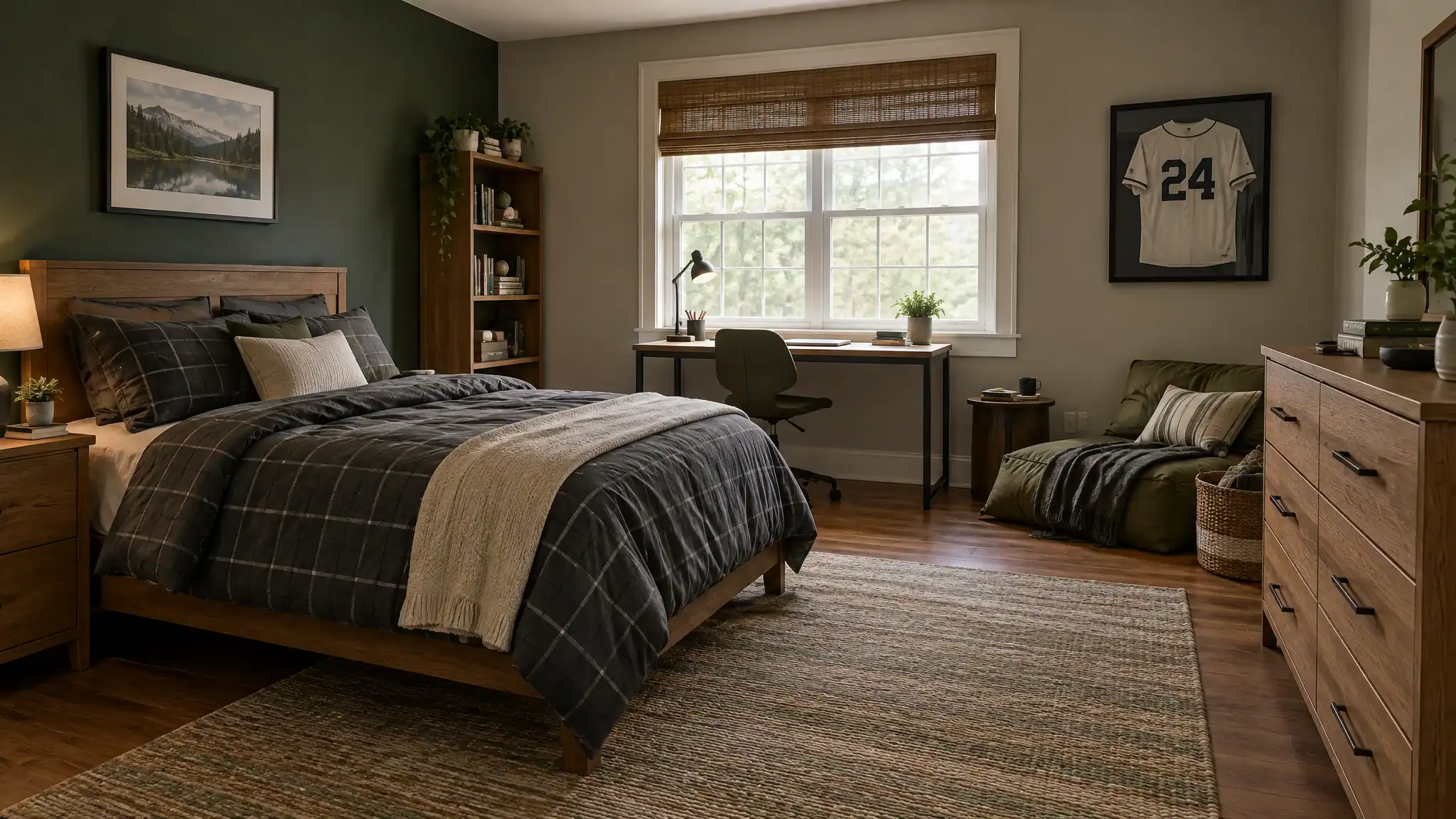
The room still looks like it belongs to a ten-year-old, and nobody wants to gut it and start over to fix that.
We’re a baseball site, and a good chunk of our readers are trying to get a teenager’s bedroom out of its Little League phase without a full renovation budget.
We’ve made most of these changes in our own house, some more than once, and the smallest ones did the most work.
Here are 20 ideas that hold up past 16, plus a couple we’d skip if we did it again.
1. Buy the Dresser You’d Want at 25, Not at 10
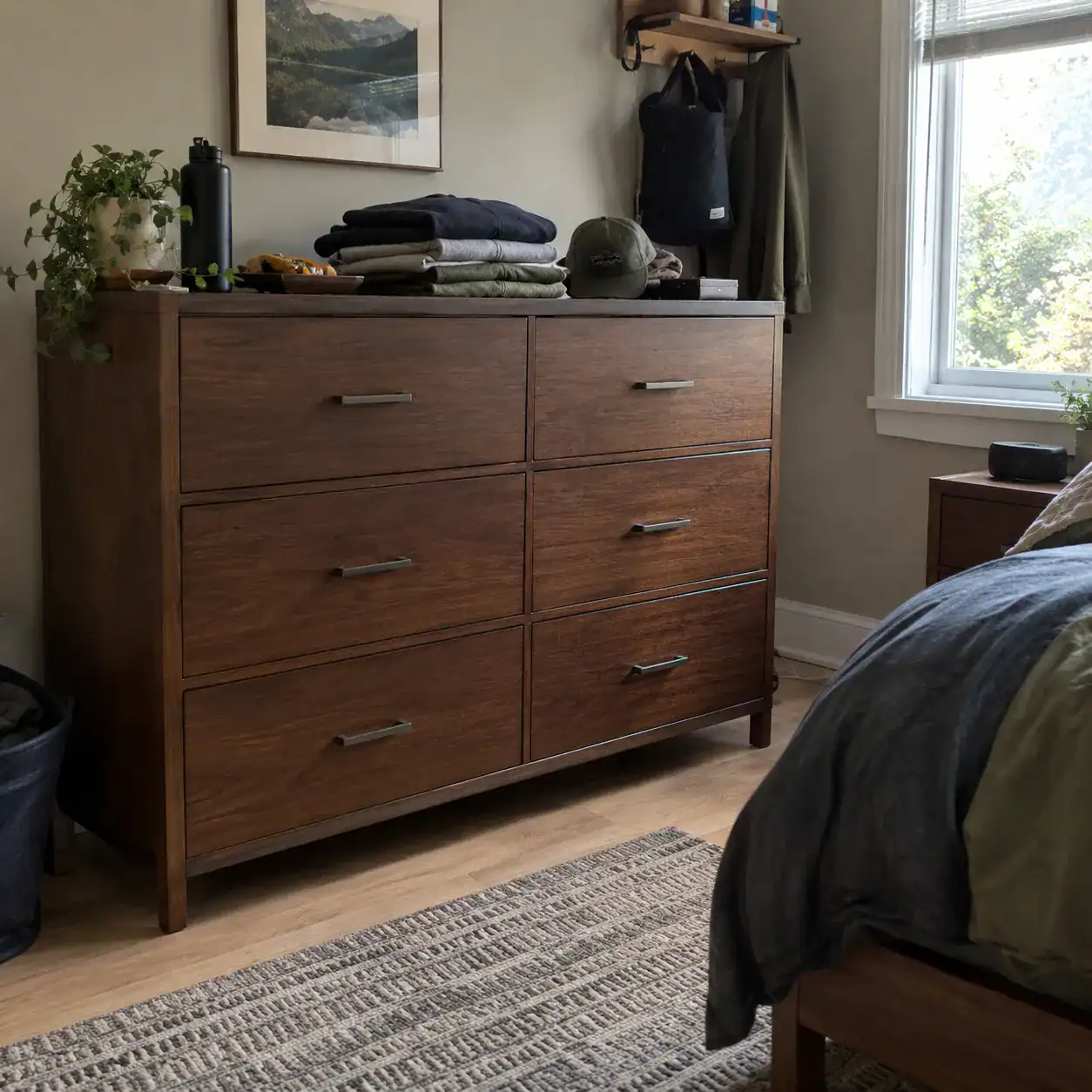
Skip the matching kids’ furniture set entirely.
We bought one when our son was nine, and by twelve he wanted every piece of it gone, dresser included. A tall dresser and a simple nightstand in an adult scale will still make sense when he’s packing for college, so you won’t need to replace them just because his tastes change.
2. Keep the Walls Neutral and Let Everything Else Do the Talking
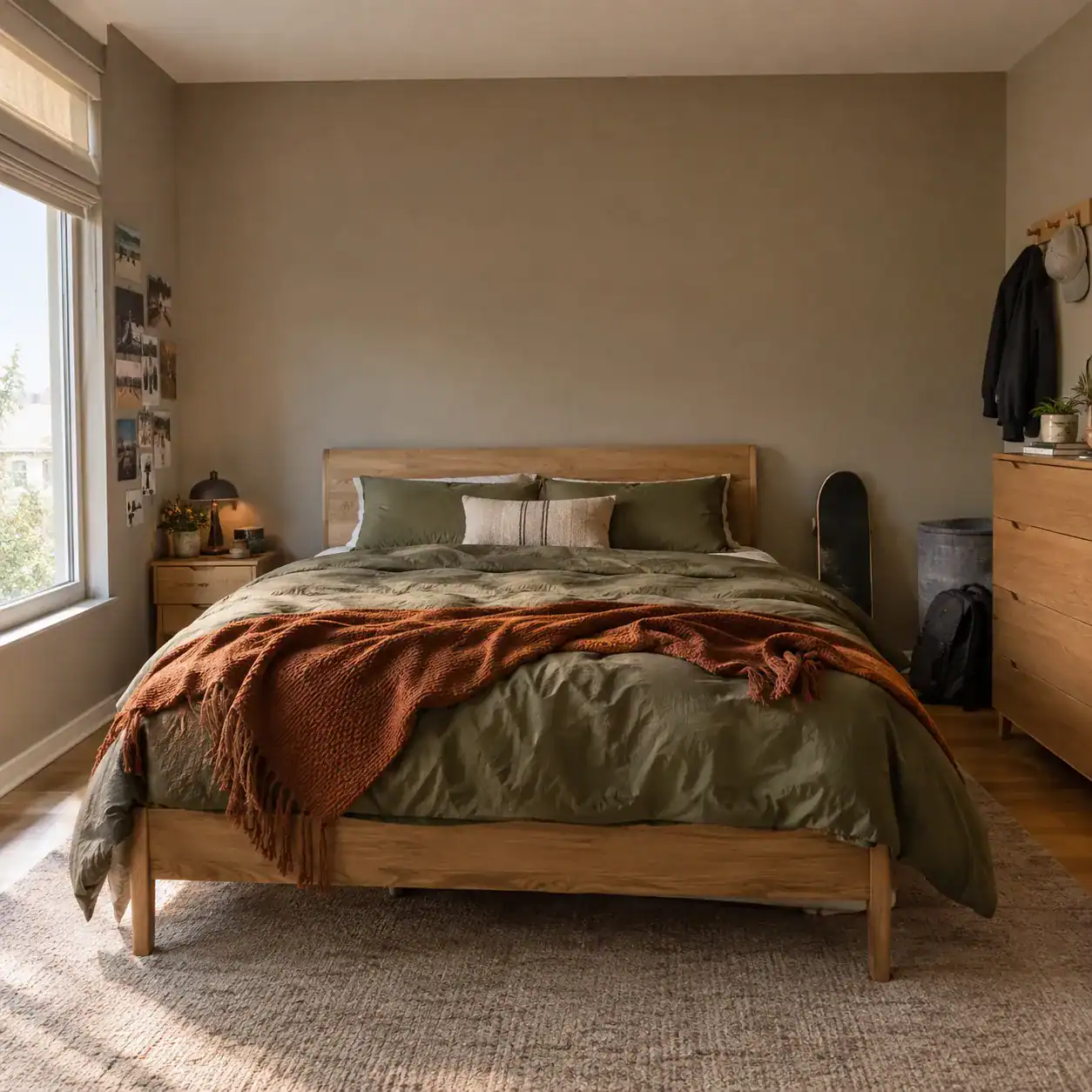
A full theme room is the wrong call if you want this to last.
Dinosaurs, then superheroes, then whatever comes after superheroes, all eventually need repainting, but a warm gray or greige wall works under any of it. We repainted our son’s bright blue walls, and they still look like a teenager picked them, not like we’re overdue for a redo.
3. Put a Loft Bed to Work Instead of Just a Bed
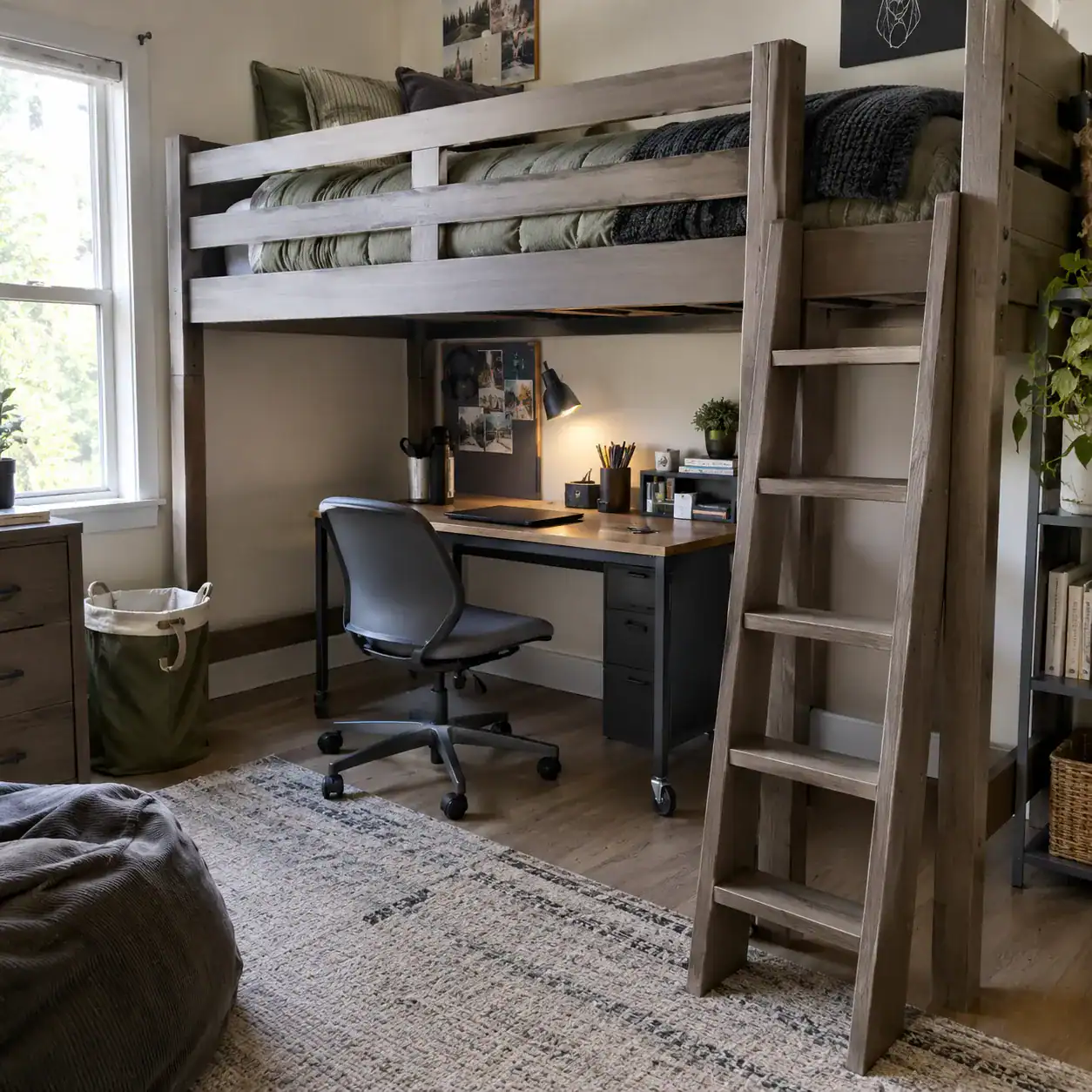
A loft bed does something a regular bed can’t: it gives you the floor space underneath for free.
A desk built for under-loft use usually sits around 28 to 30 inches high, and a lot of them roll out on casters so you can push the whole setup back when it’s not in use. Ours came with a rolling desk included, and it gave us usable floor space we didn’t have before.
4. Give the Baseball Card Collection an Actual Wall
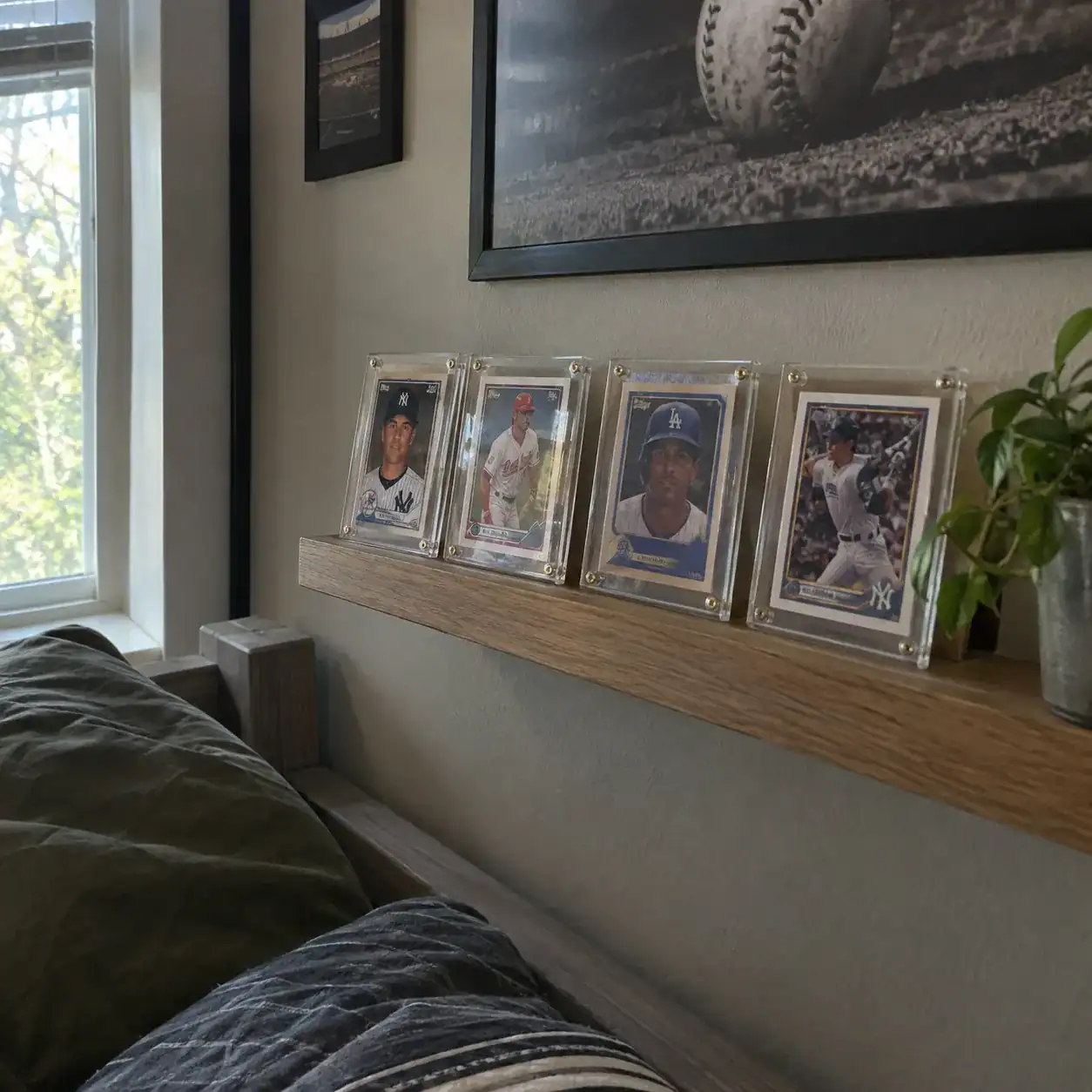
Card collections tend to live in a shoebox until somebody gives them a real home.
A track-slide frame holds around 20 cards and costs about what you’d spend on a nice picture frame. If the collection’s bigger, a ladder-style wood stand holds closer to 56, and a magnetic acrylic case is worth it for the handful of cards he’d actually be upset to lose.
5. Dedicate One Wall to Storage and Studying
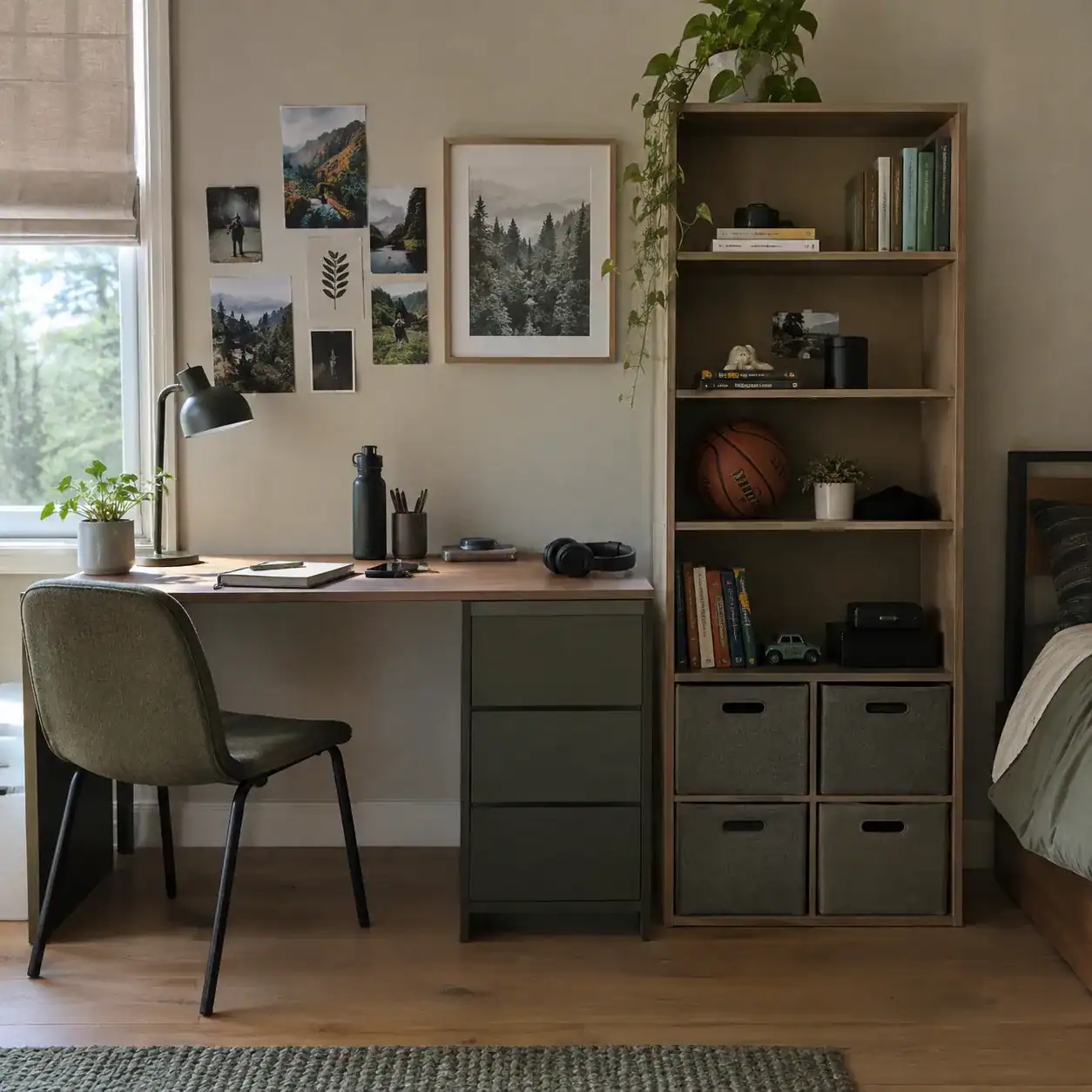
Pick one wall and make it do double duty: desk on one side, shelving on the other.
Open shelves are for the stuff he wants to look at. Closed bins are for the stuff he doesn’t, and splitting display from clutter on the same wall keeps the rest of the room from turning into overflow.
6. Get Storage Bins With Wheels or a Strap
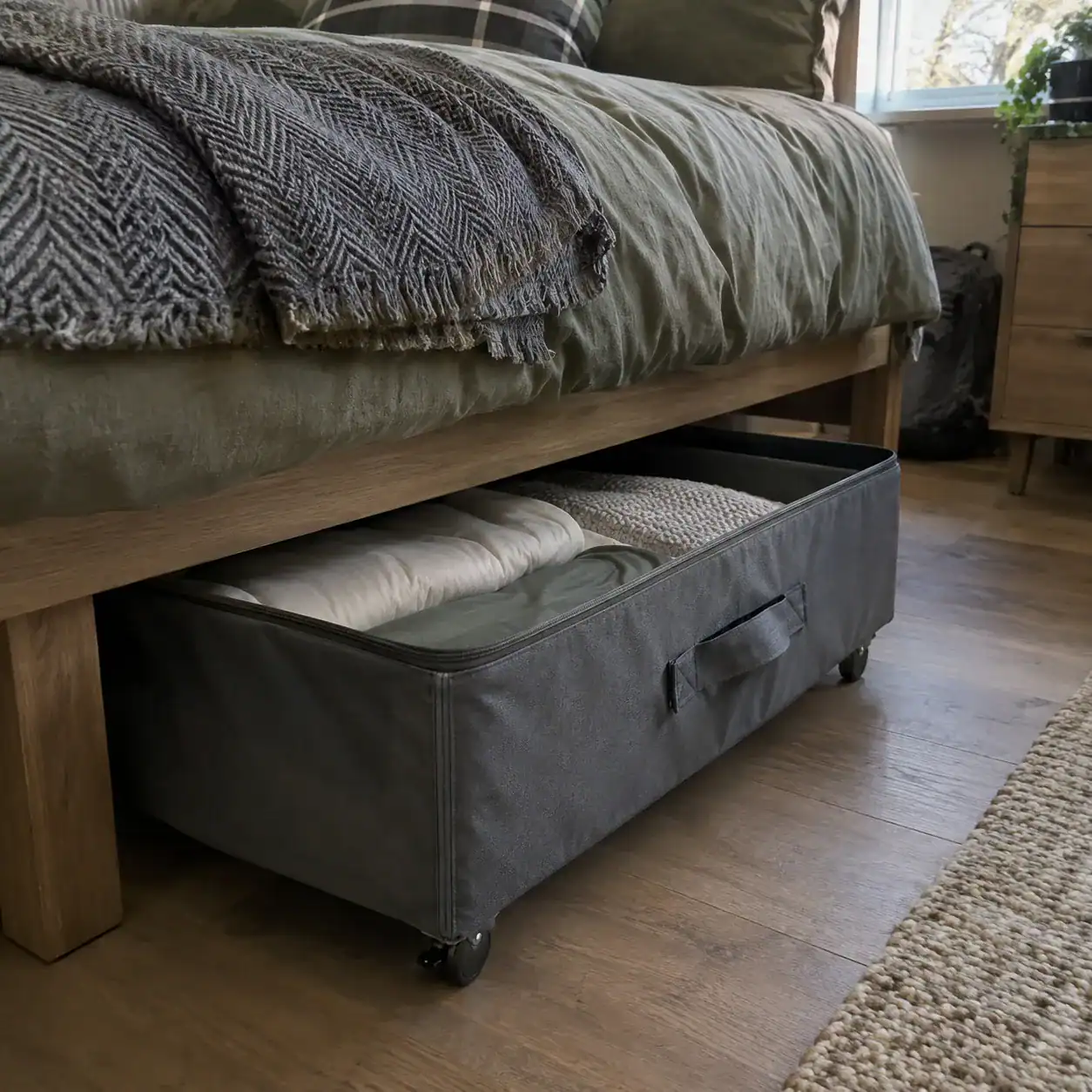
Under-bed bins only work if you can actually get them back out.
The ones without wheels or a pull strap end up wedged under there for a year, which nobody tells you until you’re on your knees fishing one out. Off-season clothes, extra gear, spare bedding: all of it fits, as long as you can reach it again.
7. Let the Furniture Double as Storage
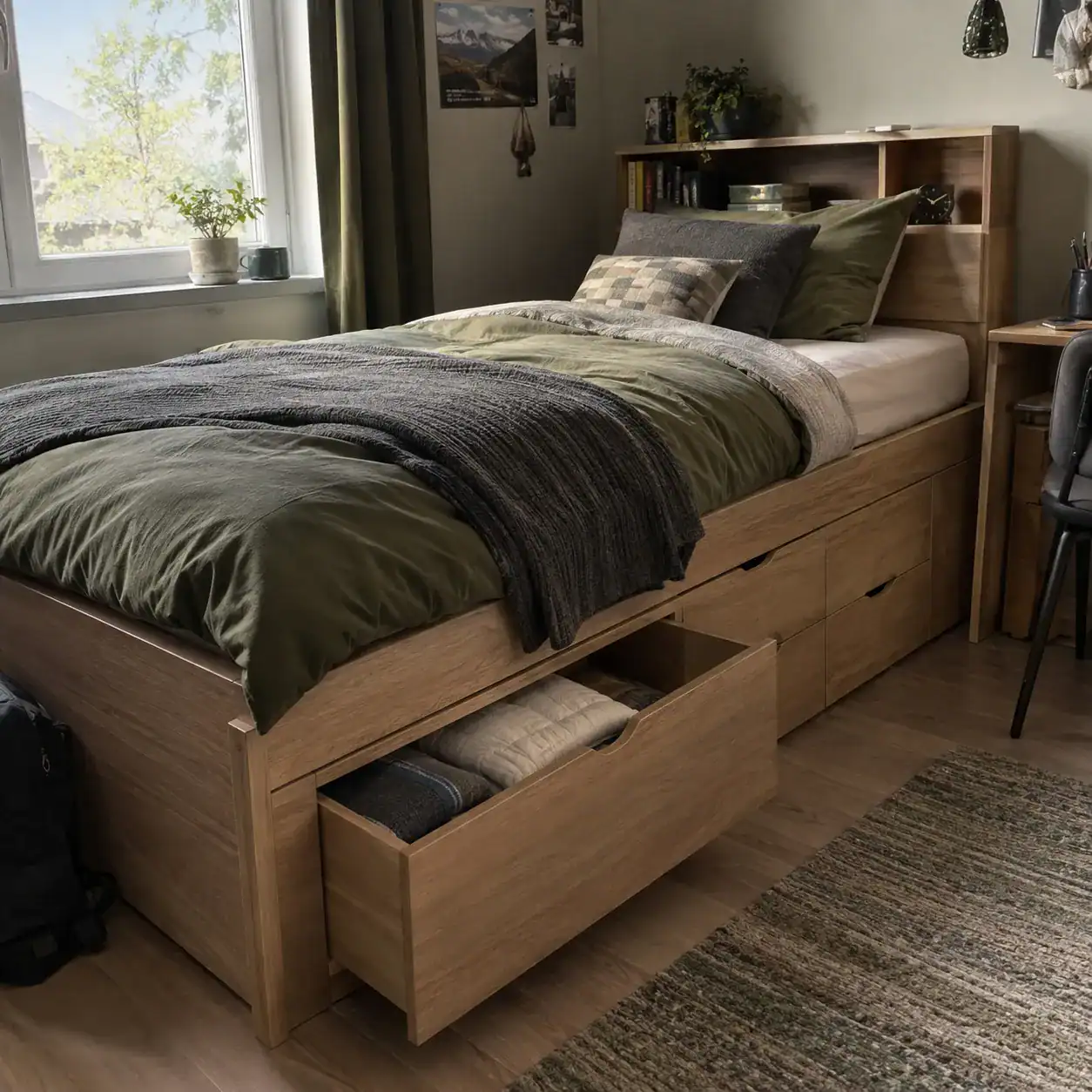
A bed frame with built-in drawers or a storage ottoman at the foot of the bed adds space without adding footprint.
Small rooms don’t have room for a separate dresser and a separate storage bench, so combining the two jobs into one piece matters more than it sounds like it should.
8. Display the Jersey Instead of Folding It in a Drawer
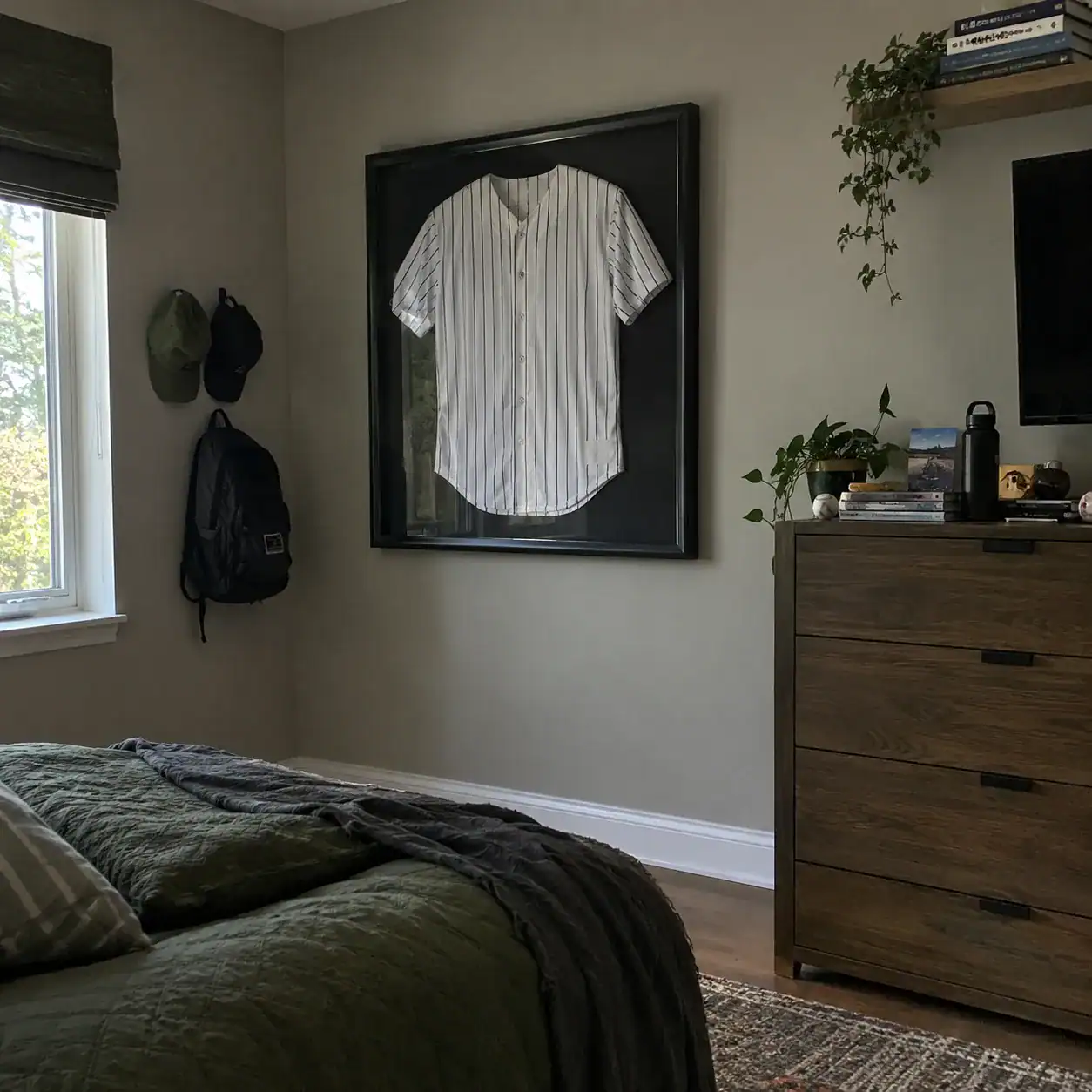
A favorite team’s jersey or a shelf of caps deserves wall space, not a drawer.
A shadow box, a row of labeled hooks, or a pegboard all turn a narrow strip of wall into display space. If you’re hanging anything with real weight to it, anchor into a stud or use a weight-rated anchor, because a framed jersey coming off the wall in the middle of the night is not a fun way to find out you didn’t.
9. Go With an L-Shaped Desk if the Room Allows It
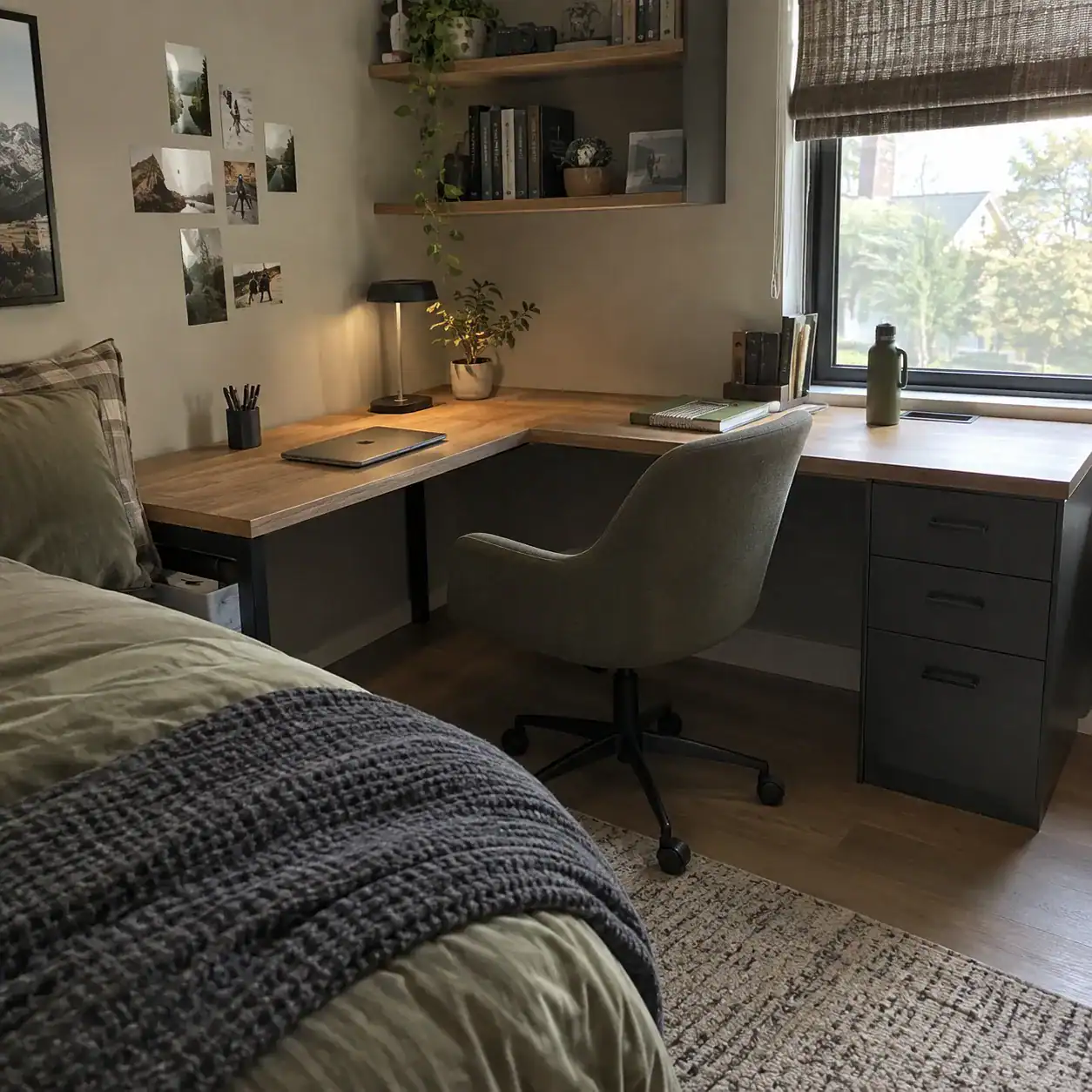
Homework gets heavier every year of high school, and an L-shaped desk in a corner gives him room to spread it out.
Fitting one against two walls instead of one usually claims less usable floor space than it looks like it would on paper.
10. Add Remote-Controlled Rope Lighting Around a Shelf
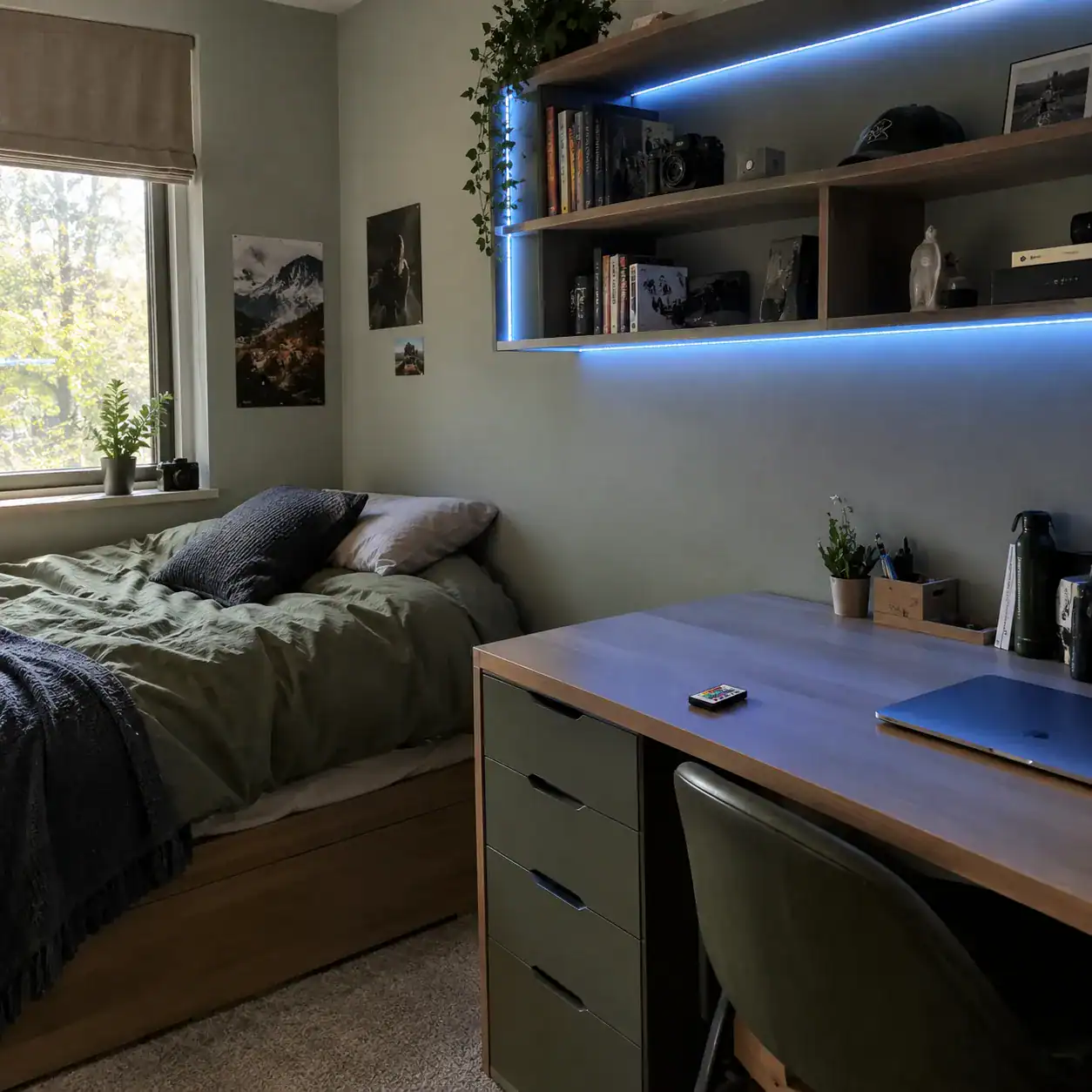
Color-changing LED rope lighting tucked along a shelf edge is a small, cheap swap that makes a room feel deliberate instead of leftover from childhood.
It runs off a remote or an app, so the mood changes without touching a single wall.
11. Build a Small Nostalgia Corner, Not a Theme Room
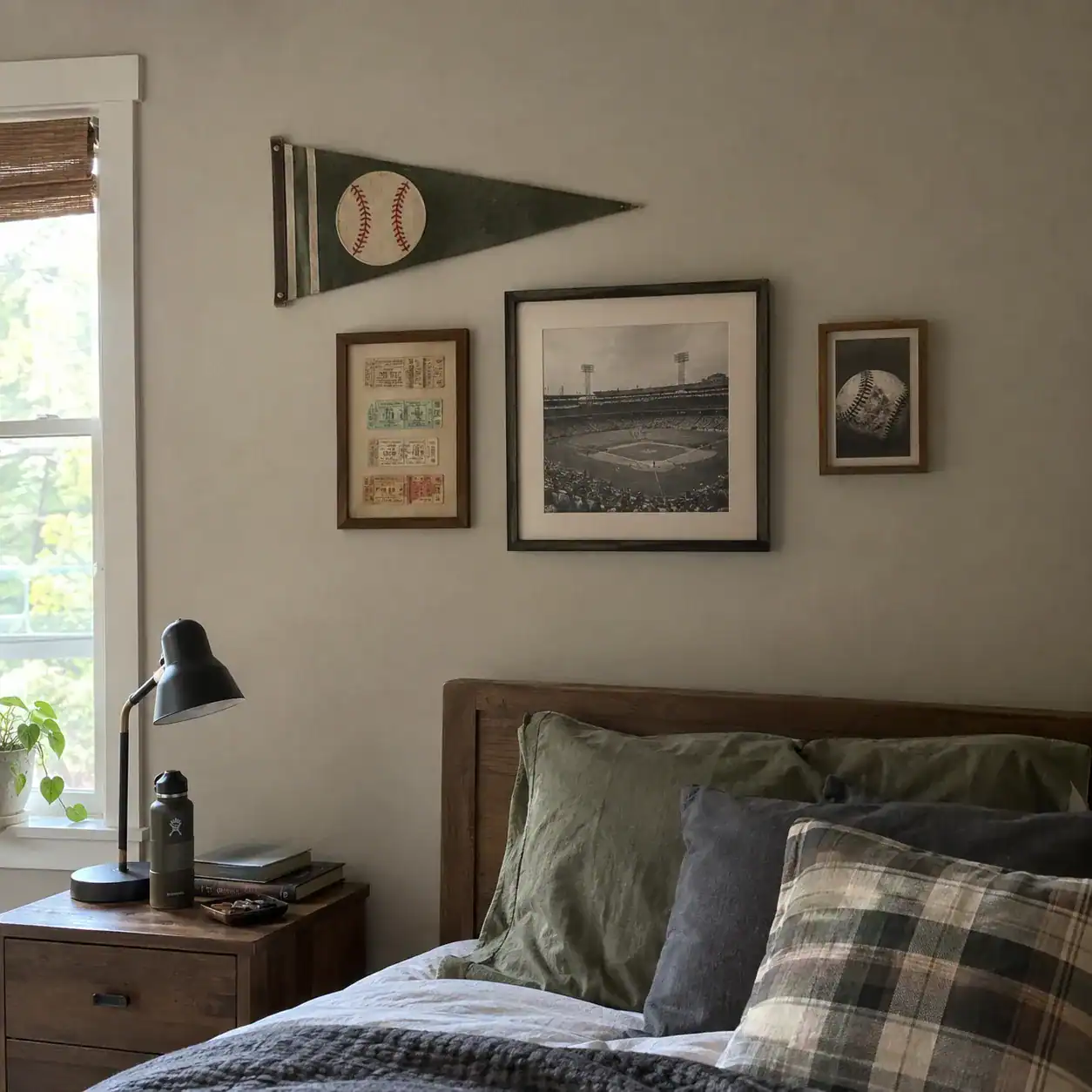
A pennant, a couple of old ticket stubs, and a faded photo or two make a nostalgia corner that reads as collected, not decorated.
The advice that comes up again and again is to cap it at two or three focal pieces. Past that, it starts looking like a kid’s theme bedroom again, which defeats the whole point of this list.
12. Hang Actual Blackout Curtains
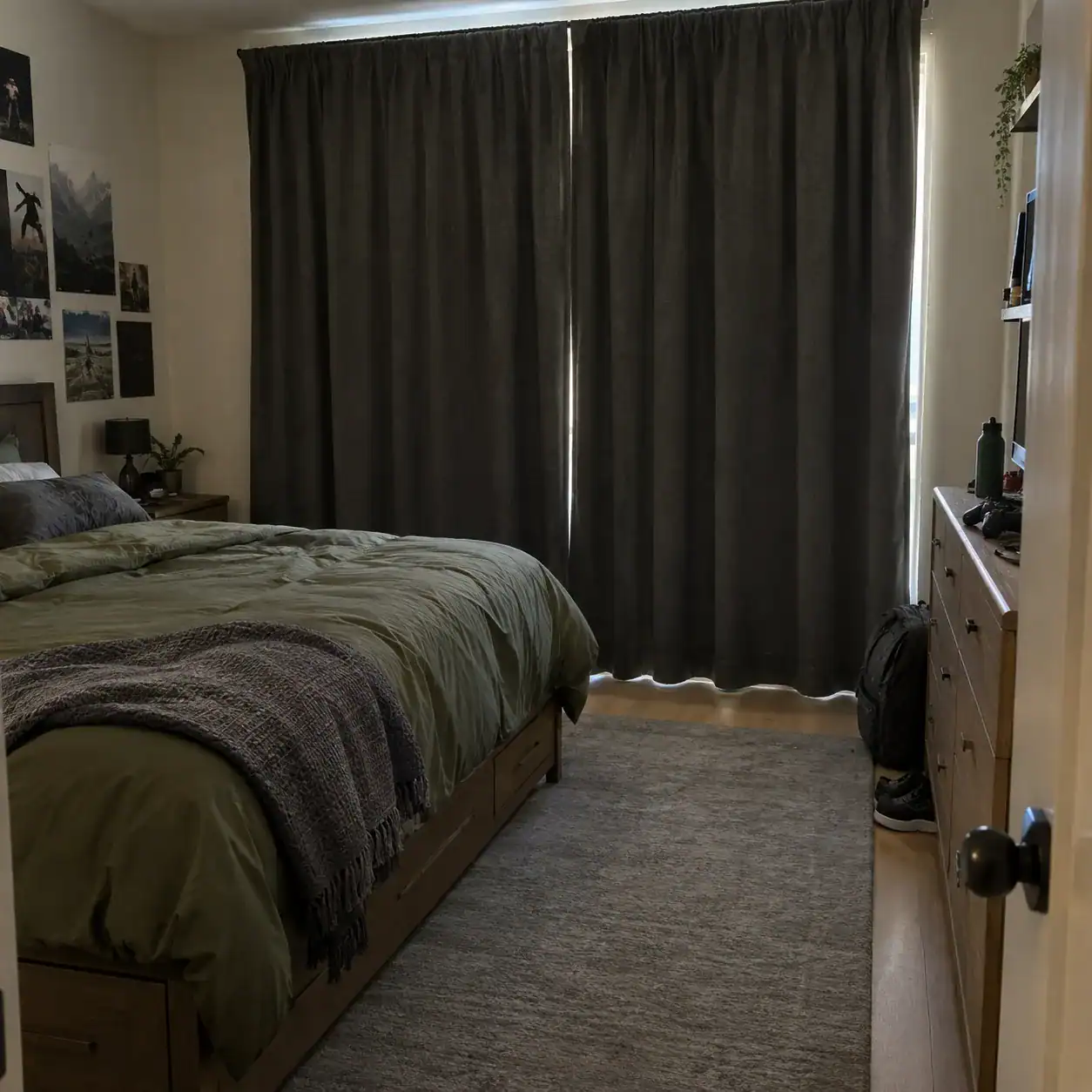
Teenagers stay up later and sleep in later, and thin curtains don’t do either one any favors.
Blackout drapes block the early light on weekends and make the room usable for daytime naps or a gaming session with the lights off.
13. Swap the Generic Wall Art for a Custom LED Sign
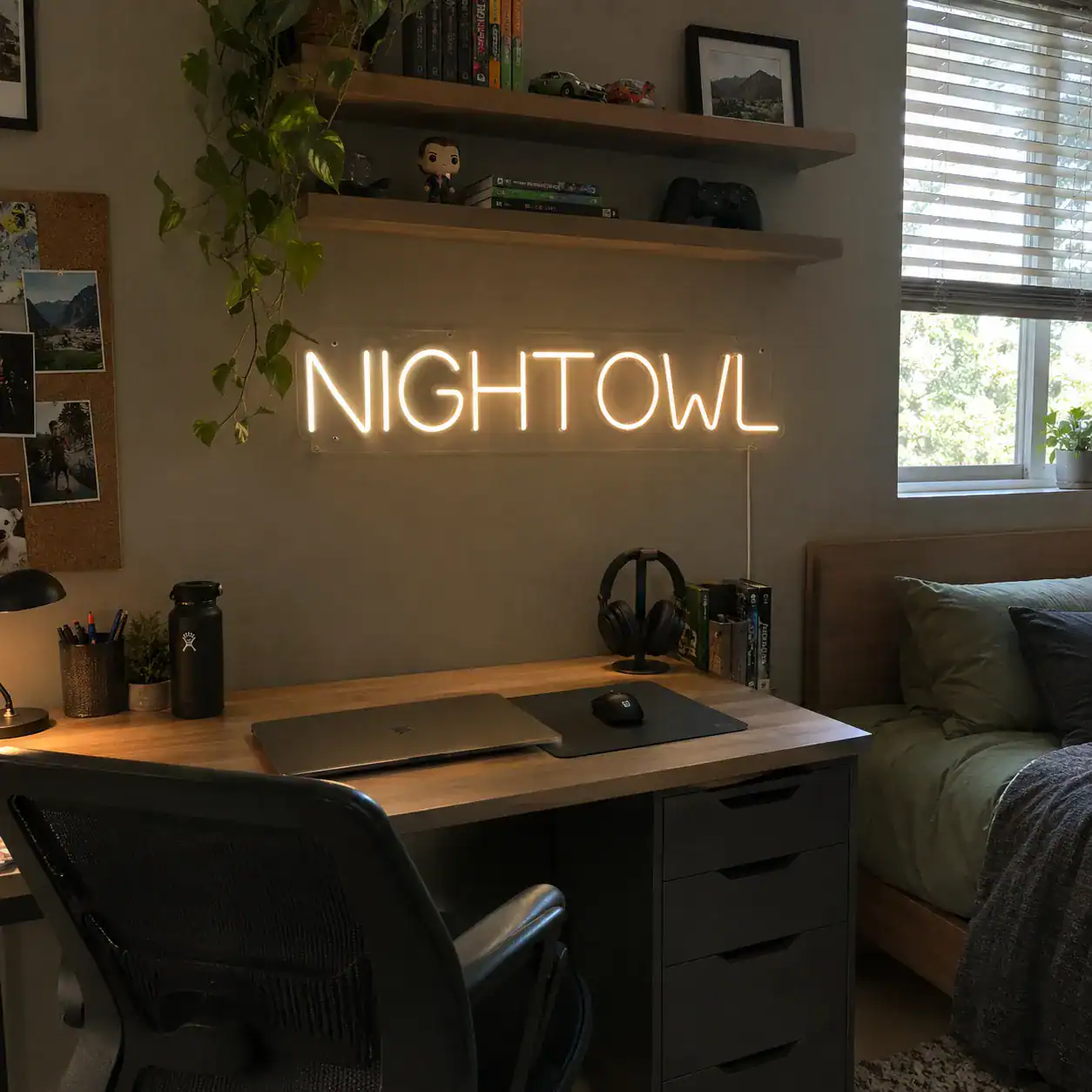
A custom LED neon sign with a gamer tag, a lyric, or an inside joke has mostly replaced the big-box poster as the go-to wall statement.
It’s easy enough to swap out when the joke or the interest changes.
14. Hang a Scoreboard Clock Instead of a Regular One
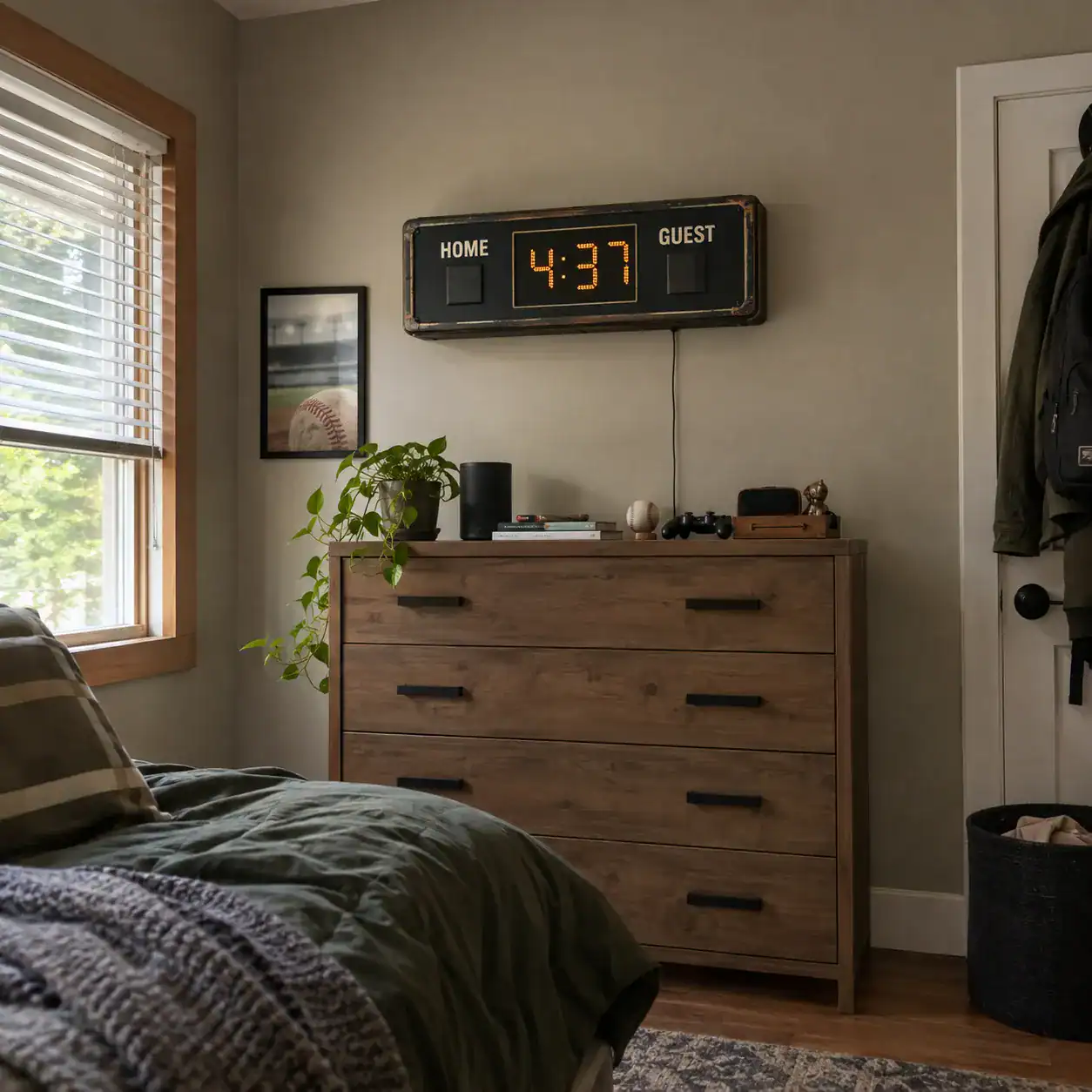
A wall clock built to look like an old scoreboard tells time while quietly doing the job of decor too.
A chalkboard section painted into a scoreboard layout works the same way, if you’d rather write on it than just look at it. Either one leans on watching the game, not playing it, which fits a room built for a fan rather than a player.
15. Go Darker Than You’d Expect
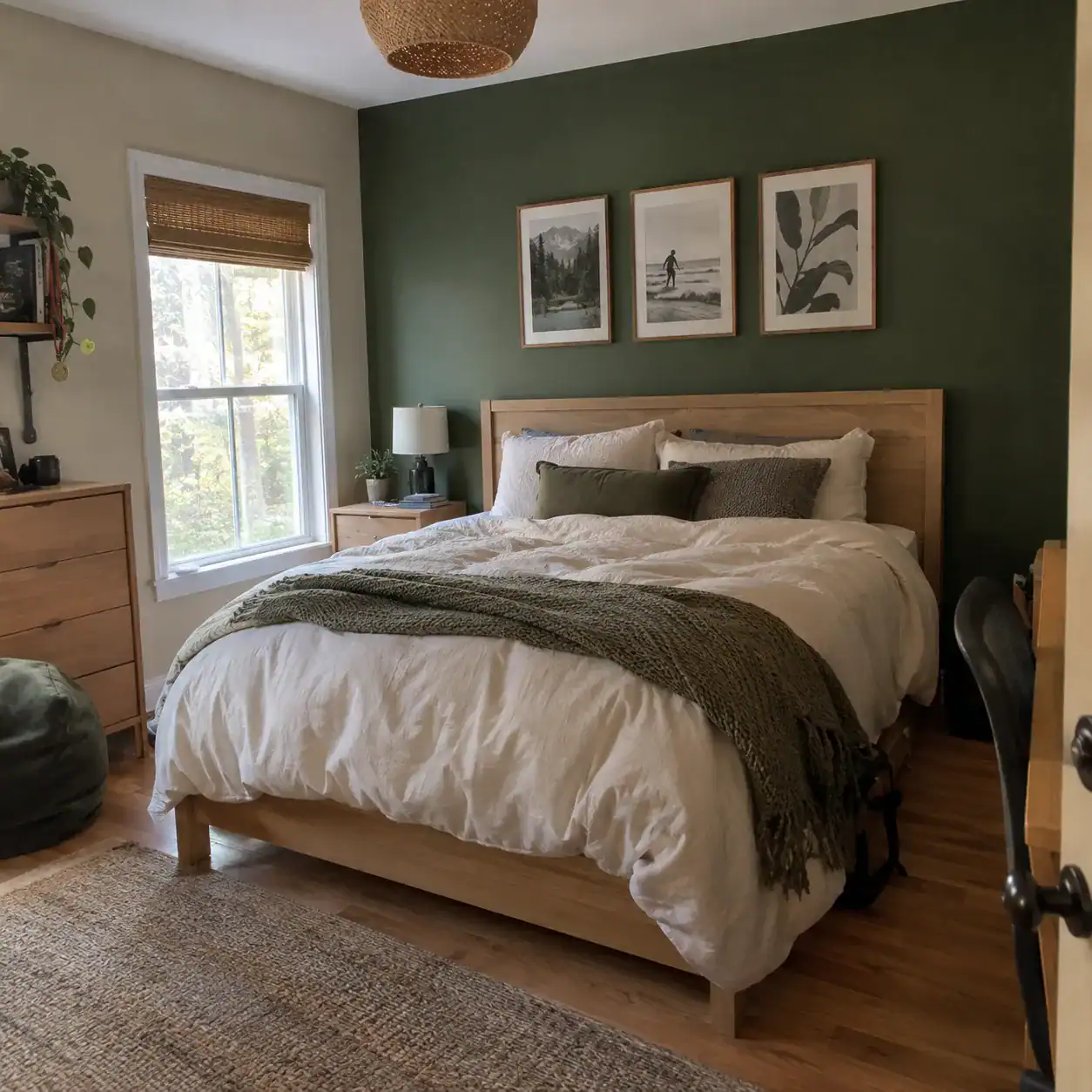
The biggest shift in teen boy bedrooms this year is away from bright primary colors and toward a single dark, moody wall, trim, or ceiling color.
It reads as more grown-up almost instantly, and it’s the fastest way to make a room stop looking like it belongs to a fourth grader.
16. Add a Hangout Spot That Isn’t the Bed
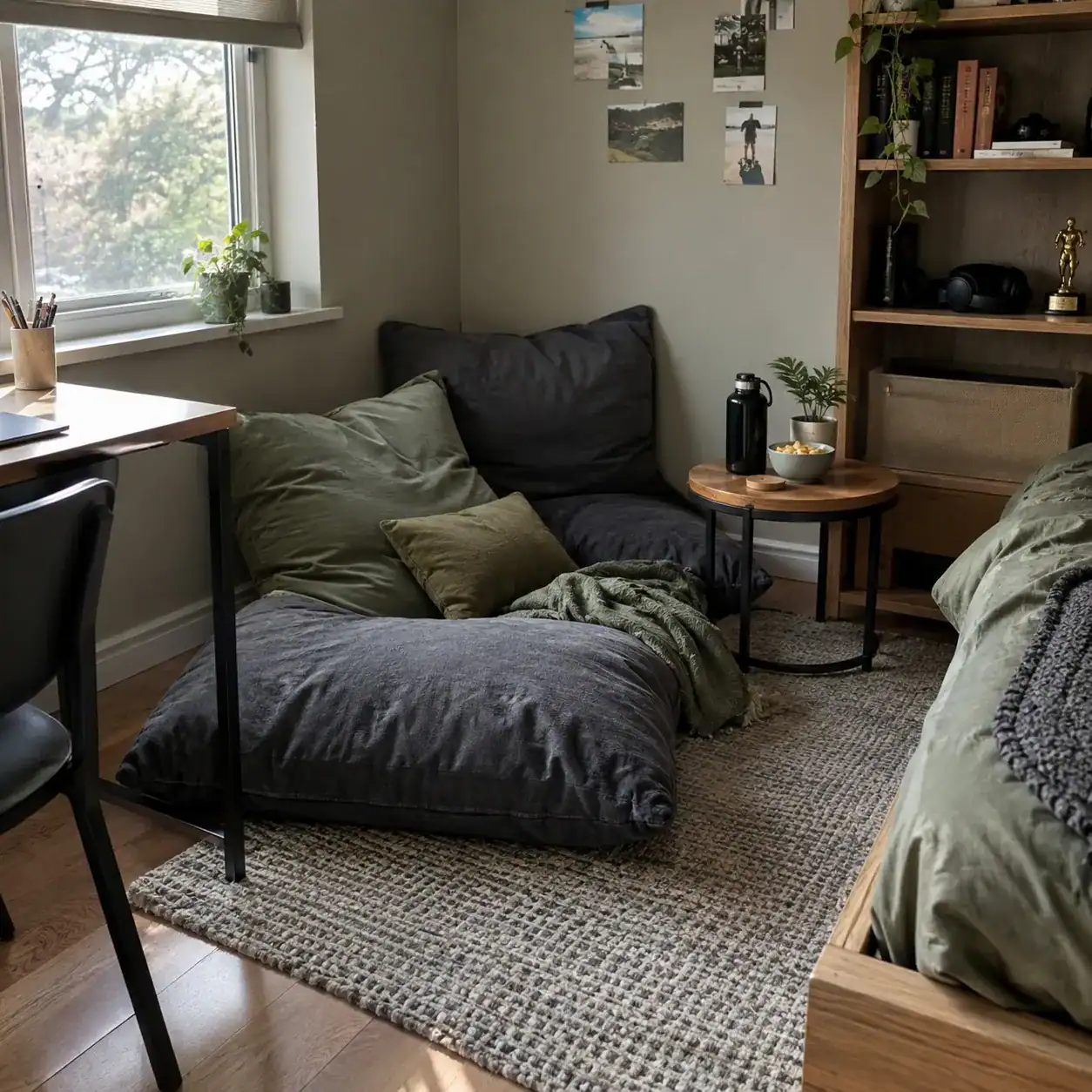
A hammock chair or a stack of floor cushions gives him somewhere to sit that isn’t the bed and isn’t the desk chair.
It doesn’t take much floor space, and it turns one corner into an actual lounge instead of just more open carpet.
17. Carve Out a Foam-Ball Catch Corner
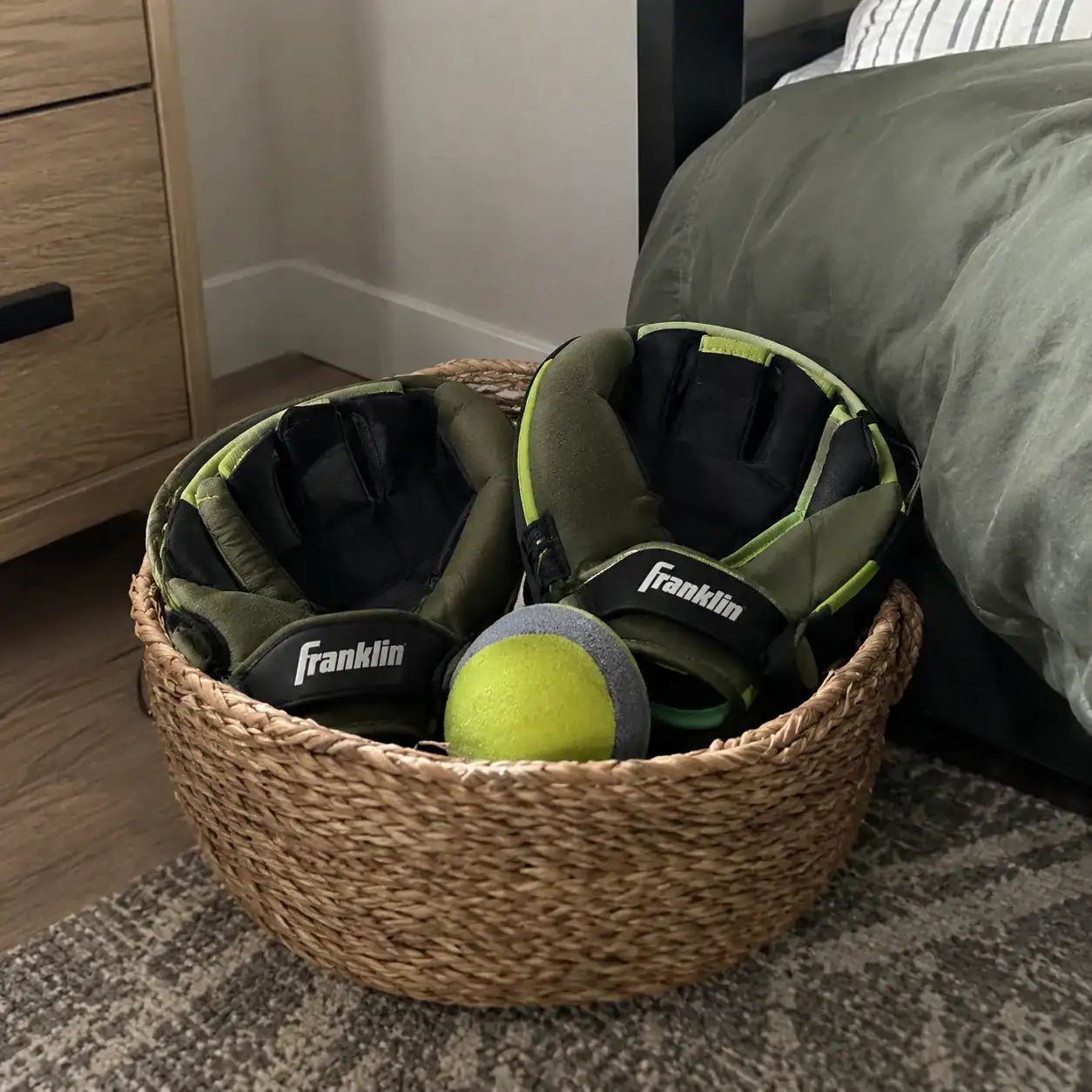
A small corner with a couple of foam-cushion gloves and a soft training ball turns spare time into a game of catch without anyone leaving the house.
It’s not fancy, and it’s not going to double as decor, but it gets used more than almost anything else on this list.
18. Use Removable Art Instead of Permanent Murals
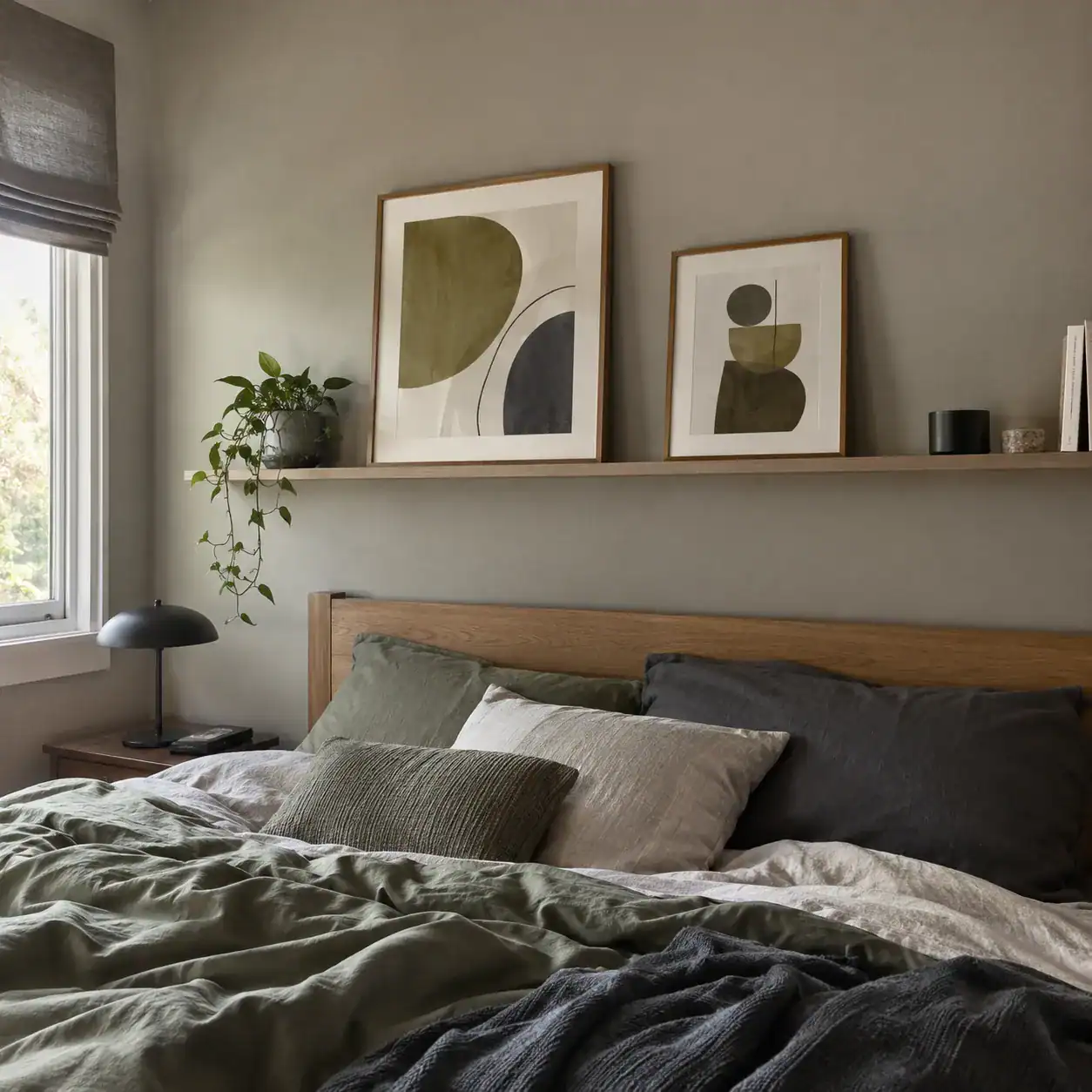
A large decal or a set of framed prints lets the room’s look shift without a repaint every time his interests do.
Framed art is the easiest version of this: swap what’s inside the frame and the wall itself never changes.
19. Bring a Little Ballpark Food Nostalgia Inside
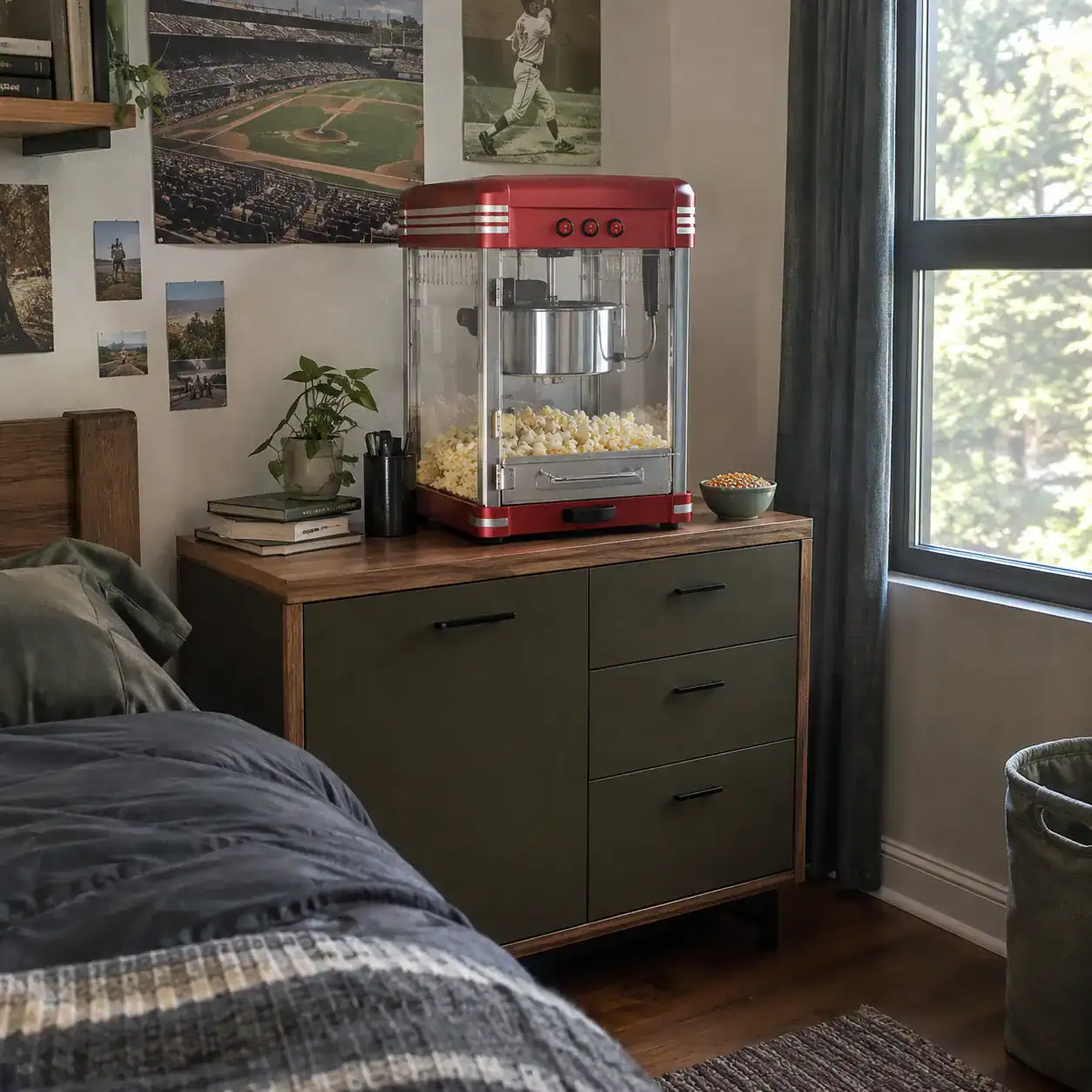
A small popcorn machine or a vintage-style concession sign brings a little bit of ballpark energy into the room without turning it into a shrine.
It’s a small, funny touch that works because it’s specific instead of generic. If you want more ideas along these lines, there’s a whole section on Game Day Kitchen built around bringing that ballpark feeling home.
20. Let Him Pick His Own Bedding
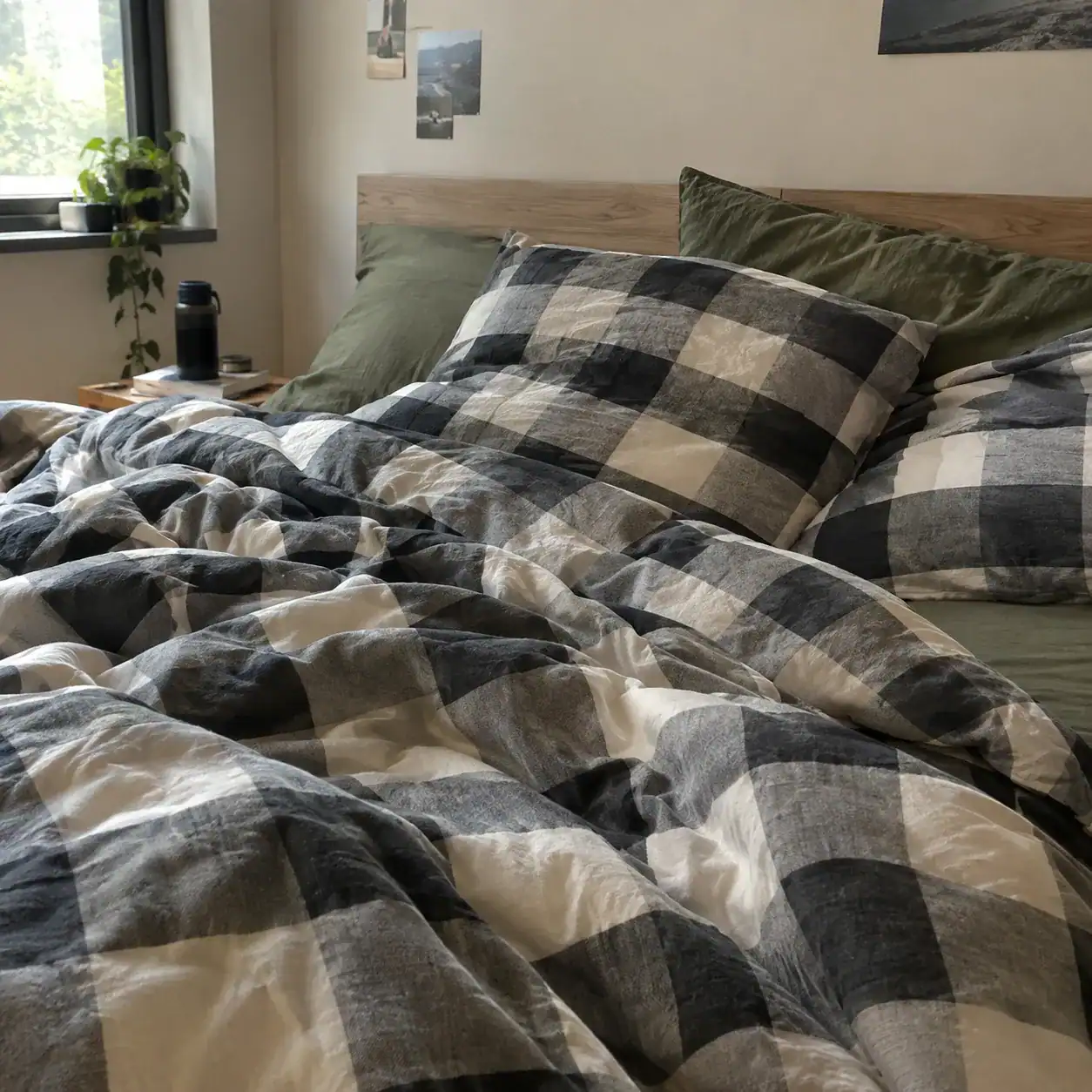
Of everything on this list, the cheapest fix might do the most: let him choose the bedding himself.
Parent-picked bedding always looks a little off to the person sleeping under it, and the moment he picks it, the room starts feeling like his instead of something decorated for him.
Start With the Wall, Not the Whole Room
You don’t have to do all twenty of these in one weekend, and you shouldn’t try. Pick the wall color and the furniture first, since those are the two things that make a room feel like it belongs to someone older.
Everything else can get added a piece at a time as the budget allows. That’s basically how ours went, a step every few months, and it still hasn’t needed a second redo.