 Written by Mark Bailey
Every family with a kid in sports ends up with the same pile.
Team photos in the plastic frame the league sold you. A jersey that fit for one season, a stack of trophies, a bin of medals nobody has looked at since the day they came home.
We have two kids, one garage, and a bin that stopped closing sometime around year four. Most of what follows we learned by getting it wrong first.
This is a baseball site, and the families who read it have garages too. Keeping your kid’s sports memories doesn’t mean keeping every object.
It means choosing a few things, giving them a spot you’ll walk past, and letting the rest go.
1. Pick One Thing Per Season

Before anything gets boxed, choose one object that stands for the whole season.
A photo, a ball, a ribbon, a program. Let your kid pick, with a little steering from you.
Everything else gets photographed and released. One thing a year for ten years is still ten things, and ten things is a shelf.
We started this rule the year the bin lid quit, and it’s the only one on this list we’ve never broken.
2. Photograph the Bulky Stuff

Some things are meaningful and also enormous.
The giant foam finger, the banner from the end-of-year party, the poster board sign a grandparent painted. Take a good photo of your kid holding the item in daylight against a plain wall.
Print it at 4×6 and add it to the album. The object goes to recycling and the memory stays in a form you’ll actually look at.
3. Turn Outgrown Jerseys Into a Quilt

Jerseys are the hardest thing to throw away and the easiest thing to never wear again.
We mailed twelve of them to a T-shirt quilt company and got a lap-size throw back nine weeks later, for about $180. The collars have to come off before you ship, so budget an evening with scissors.
If you sew, fusible interfacing and a rotary cutter will get you the same result for the cost of the backing. Either way, that blanket now lives on the couch and gets used every night.
4. Give One Baseball a Cube
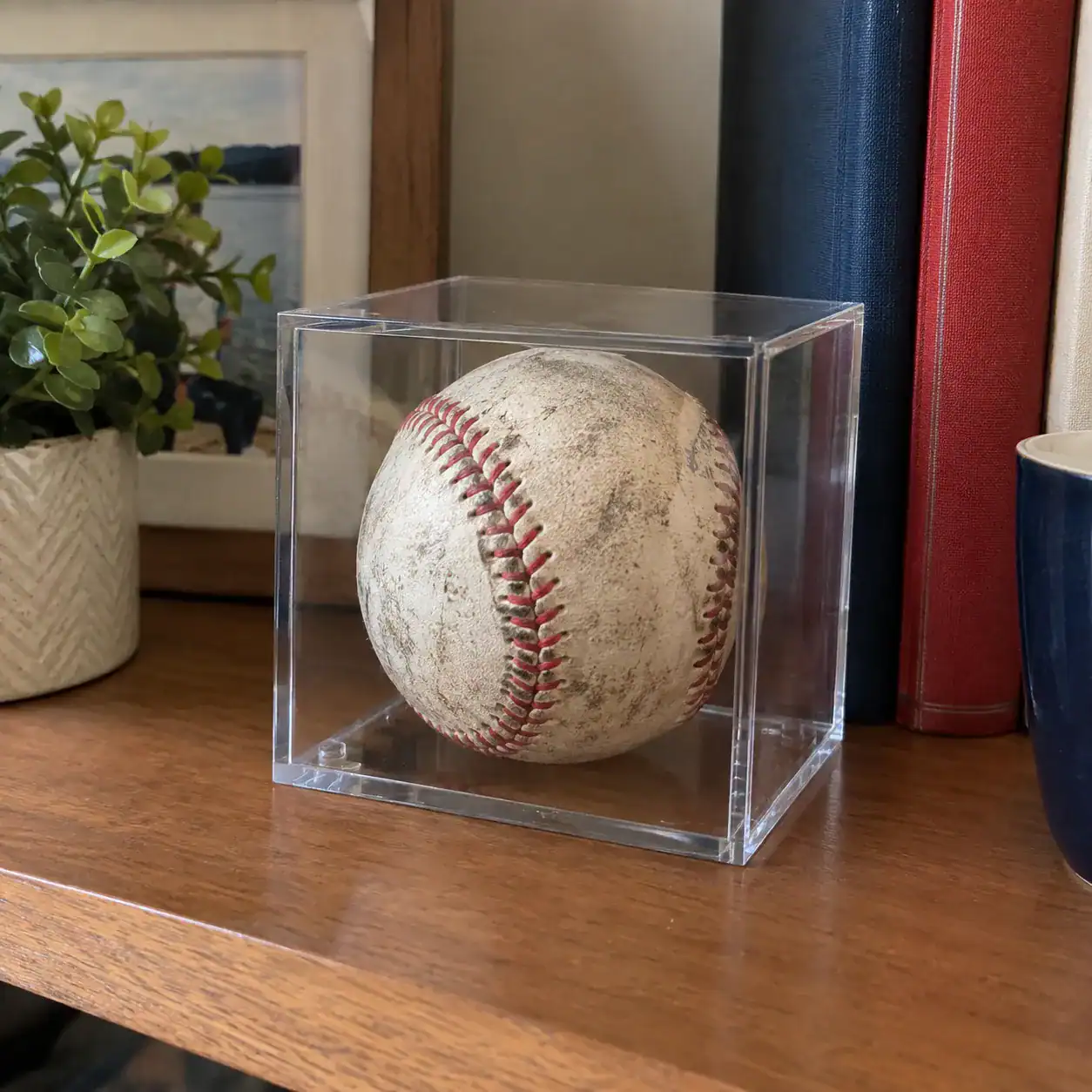
A single baseball in an acrylic cube is the best-looking thing on most bookshelves.
It could be a foul ball caught at a game, the ball from the first game you took them to, or one a player tossed over the railing. Skip the $8 cubes: ours yellowed after two summers in a south-facing window, and the UV-protected ones at around $15 haven’t.
Write the date and the matchup on the underside in fine marker first. Twenty years from now, that’s the only way you’ll remember why this scuffed ball earned a spot.
5. One Shadow Box Per Kid, Not Per Season

Shadow boxes get out of hand fast when every season earns its own.
Give each child a single deep box, around 16 by 20, and be a strict curator. The ribbon from age six retires when the medal from age twelve arrives.
Whatever comes out goes into the album or the memory bin. The wall stays the same size no matter how long they play.
6. Frame the Ballpark Programs and Tickets

Every game you go to as a family leaves paper behind.
Ticket stubs, the program, the wrapper from the seat-cushion giveaway. Collect them in one deep frame with a mat, arranged loosely so new ones slide in.
One warning from experience: thermal-printed tickets fade to blank in about three years, even out of the sun. Scan or photograph them the week you get home, and frame the print instead of the original if it’s one you care about.
7. Make One Photo Book a Year

A slim photo book every winter beats a phone with 14,000 pictures on it.
Pick 30 to 40 shots from the year. Team photos, action shots from the bleachers, the blurry one where they’re grinning at you instead of the ball.
Order one hardcover from any photo book service and keep them together on a single shelf. In ten years that shelf is the whole childhood, in order, in one place.
8. Don’t Build the Trophy Shelf

Every article on this topic tells you to build a trophy shelf, and I’d tell you not to bother.
We put one up in the hallway, twenty trophies in a neat row, and in a year I never once saw a kid stop and look at it. Trophies are for the day they’re handed out, and then they’re plastic.
Keep the two or three that mark something real, a championship or a first. Photograph the rest with your kid holding them and take them to a trophy shop that reuses the parts.
9. Make a Rookie Card Every Season

One posed photo in uniform each year becomes a baseball card.
Print it at wallet size, 2.5 by 3.5, at any drugstore photo kiosk, and write the season, position, and a stat or two on the back. Goals, innings pitched, or “most improved slide” all count.
Slide each card into a nine-pocket page in a binder. Kids love seeing their own card next to the one from three years earlier.
10. Keep a One-Line Season Journal

A plain notebook does what a scrapbook never gets around to.
At the end of each season, write three or four lines. The team name, one memory, something they said in the car on the way home.
It takes five minutes. The objects tell you what happened, and the notebook tells you what it felt like.
That second part is what everyone forgets first.
11. Hang the Caps on a Rail

Ballcaps pile up, and nobody throws them out.
A wall rail with hooks, or a row of hooks screwed into a board, turns a drawer of caps into a wall that reads as decor. Hang them by the back strap, not the bill; we learned the hard way that a bill on a hook warps in a month.
The sweat-stained ones get the photo treatment. A rail above a closet door or down a hallway takes up zero floor space.
12. A Medal and Ribbon Hanger

Medals are cheap to display and awkward to store.
A wall hanger with a bar and hooks holds a few dozen in a strip about two feet wide. One hanger per kid is plenty.
Set a limit, too. When the bar is full, the least meaningful medal moves to the memory bin, and that rule is what keeps the hanger from becoming a second garage.
13. Keep the Scorecards You Filled Out Together
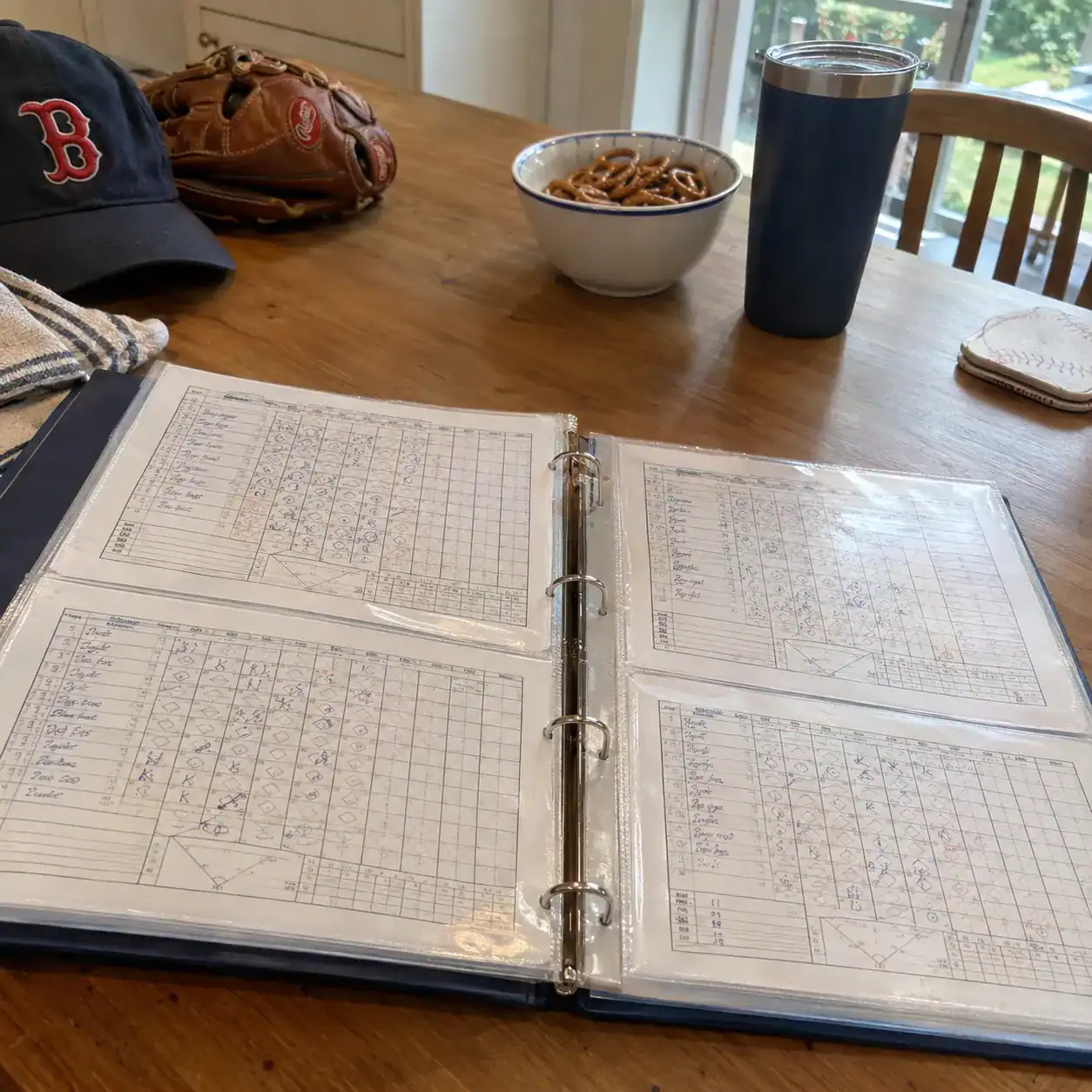
A scorecard your kid helped fill out is a better souvenir than anything in the gift shop.
It has their handwriting, the date, the mistakes, and the inning where you both stopped paying attention. Store them flat in a binder with sheet protectors.
Use a pen, not the free concession-stand pencil, or photograph it that night. Pencil on cheap program paper is nearly gone in a few years, and reading one back is the closest thing to sitting in that seat again.
14. Make a Ten-Second-Per-Season Video

Of everything on this list, this is the one our family actually rewatches.
Once a year, pick one ten-second clip from each kid’s season and add it to a running video, oldest first. After a decade it’s two minutes long.
Back it up somewhere a lost phone can’t take it. Then save it for graduation and try not to cry.
15. Hold a Yearly Sort Day

Pick a date, maybe the week after the last season ends.
Pull out the bin, sit on the floor with your kid, and go through it together using the rules above. What stays, what gets photographed, what goes.
It takes an hour. The sorting is the part they’ll remember, and the garage stays empty.
The Bottom Line
None of this is about keeping less because the memories matter less.
A bin in the garage is where memories go to be forgotten. A shelf, a frame, a quilt on the couch, a binder on the bookshelf: those get seen.
Pick the few things worth seeing and let them be seen.