 Written by Mark Bailey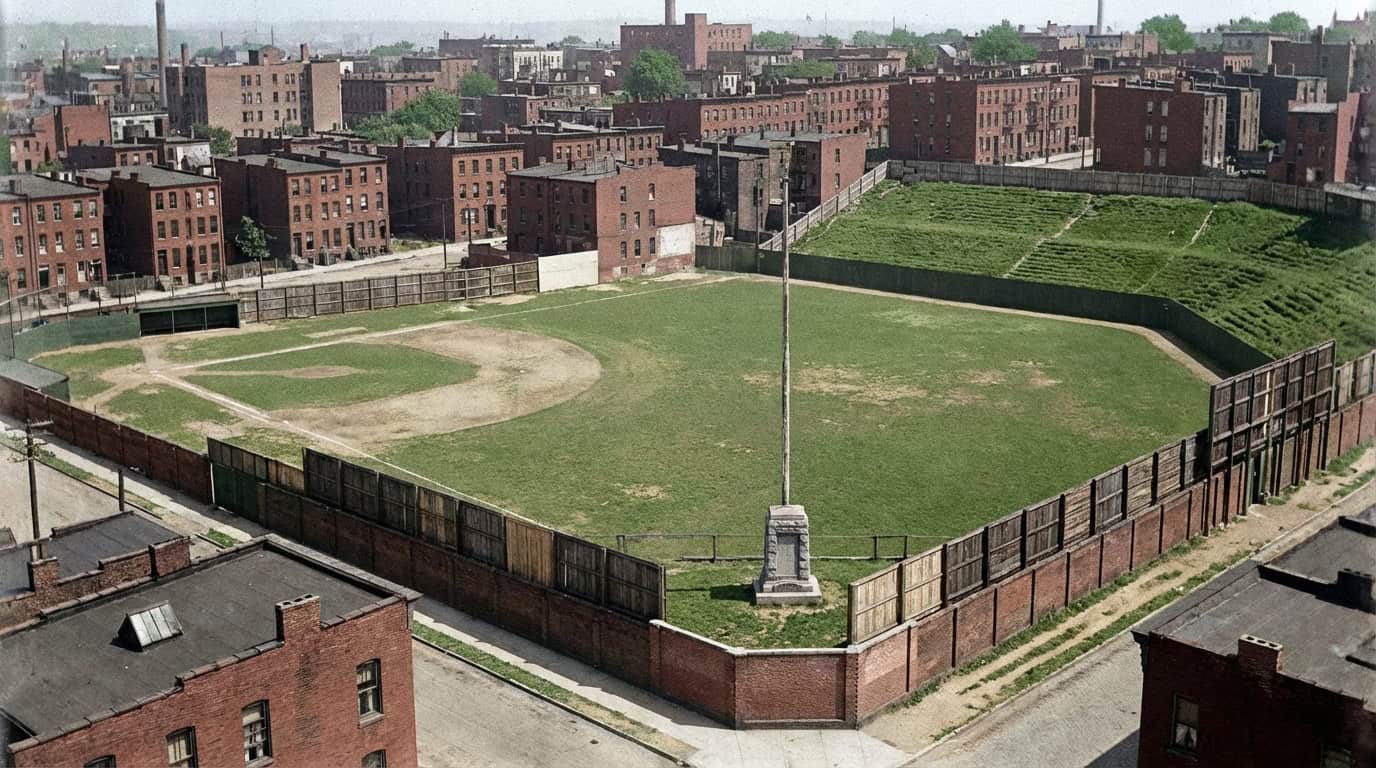
Remember when baseball stadiums had personalities?
Not the carefully focus-grouped, corporate-approved kind. The real, messy, what-were-they-thinking kind.
Back when ballparks were crammed into city blocks like Tetris pieces. When outfielders didn’t just chase fly balls—they climbed mountains, dodged flagpoles, and played hopscotch around granite monuments.
These weren’t design choices. They were beautiful accidents.
The kind that happen when you’re trying to squeeze America’s pastime into neighborhoods that already existed. Onto lots shaped like trapezoids, next to property owners who told team owners exactly where they could shove their expansion plans.
Here are eighteen bizarre features that made old ballparks completely ridiculous—and completely perfect.
1. Walls That Made Fenway’s Monster Look Adorable
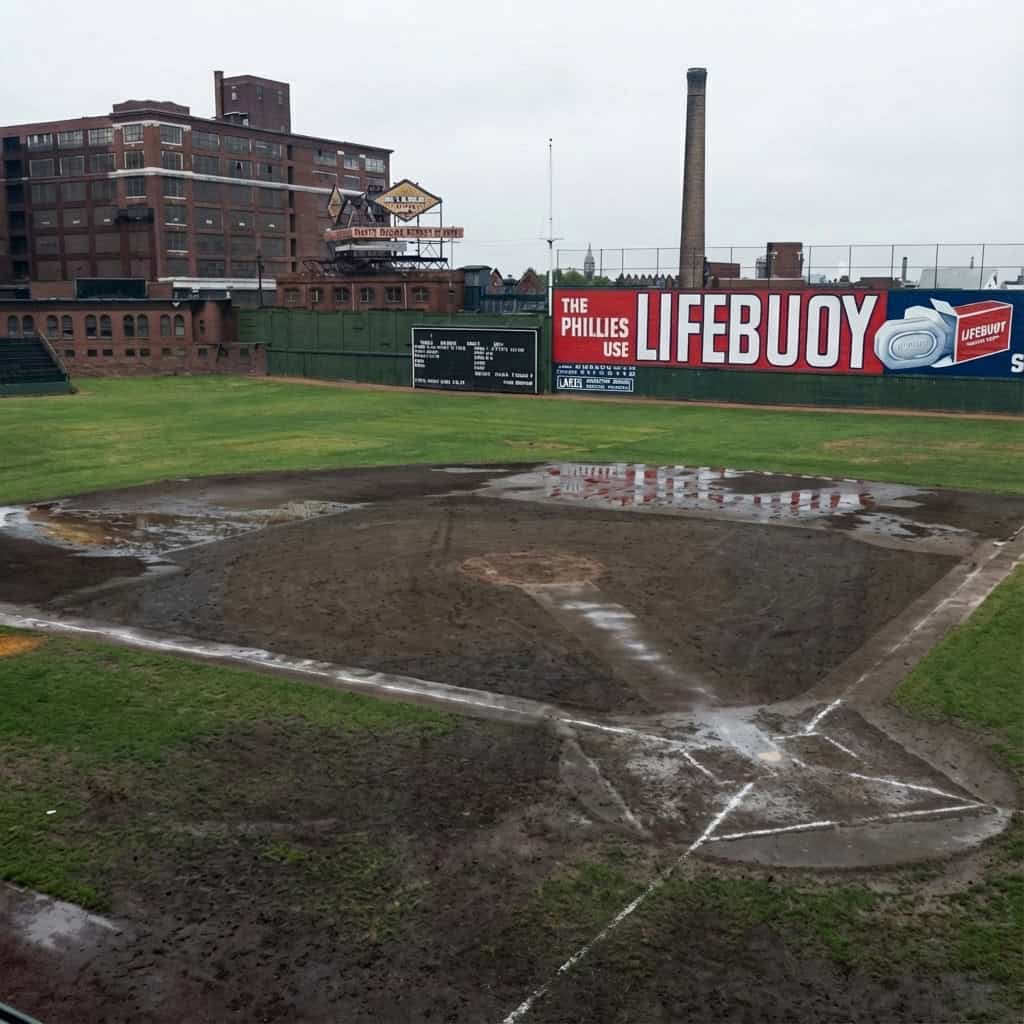
Baker Bowl’s right field wall wasn’t just tall. It was sixty feet of tin-covered intimidation.
Twenty feet taller than the Green Monster. So close to home plate at 280 feet that sportswriter Red Smith once quipped, “If the right fielder had eaten onions at lunch, the second baseman knew it.”
The sound of a baseball clanging off that tin wall became the stadium’s signature soundtrack. A thunderous reminder that you were at the Baker Bowl and nowhere else.
Cleveland’s League Park had a similar problem. Right field was barely over 290 feet away, so they built a fence that scraped the sky.
The replica still stands today. You can visit it, stand underneath it, and feel completely insignificant.
2. Outfields Deeper Than Your Childhood Seemed Long
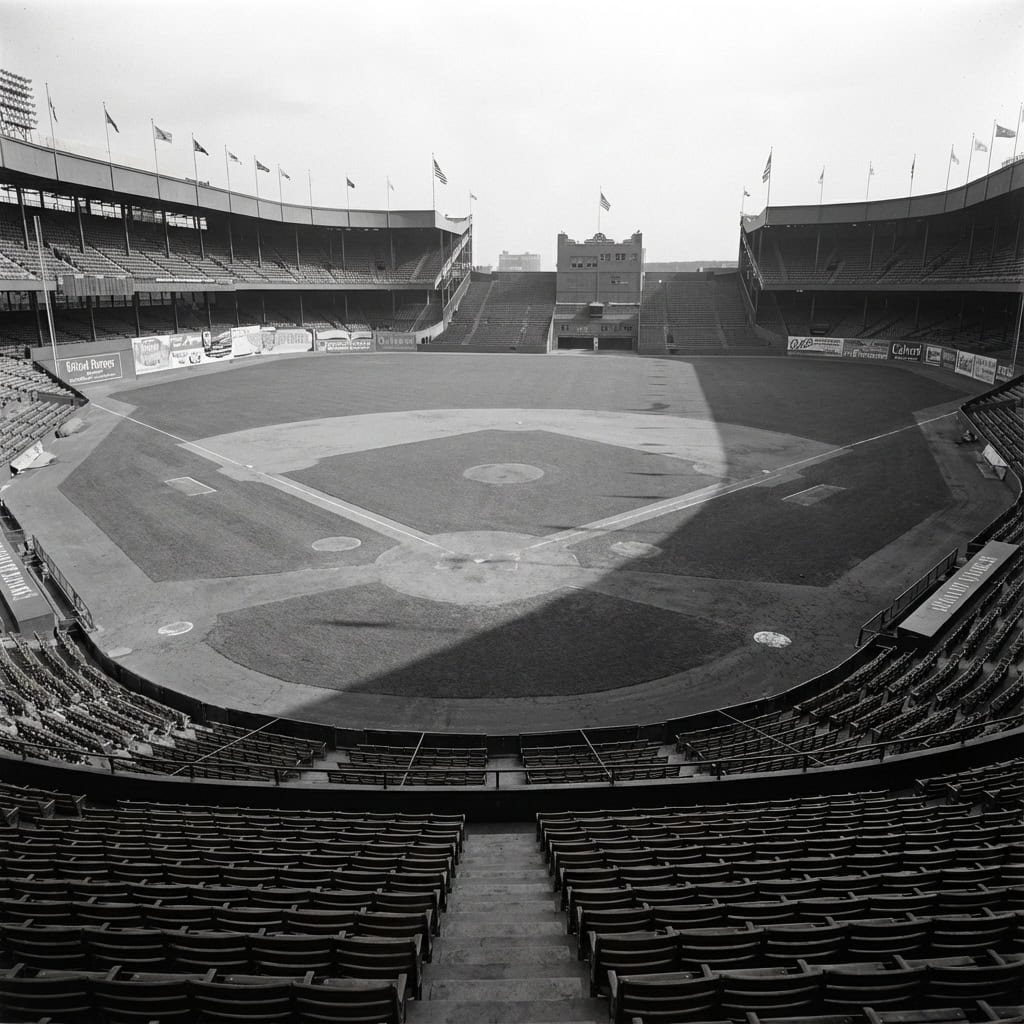
While some parks built walls to the moon, others just said “screw it” and made you earn it.
The Polo Grounds gets all the glory for its 505-foot center field. But Boston’s Huntington Avenue Grounds laughed at that number.
635 feet to the wall at its deepest point.
The longest home run in MLB history traveled 575 feet. Meaning even Babe Ruth couldn’t have cleared that wall. Ever.
These were statements, not mistakes. “You want a home run? Prove it.”
3. Mountains and Cliffs That Turned Outfielders Into Goats

Flat fields are boring. Old-school baseball understood this.
Crosley Field in Cincinnati featured “The Terrace”—a legitimate 15-degree incline in the outfield. Frank Robinson said you couldn’t run up it—you had to climb it while tracking a baseball.
The slope claimed Babe Ruth himself. Days before retirement, the Sultan of Swat tumbled down that hill chasing a fly ball, eating dirt in front of everyone.
Fenway Park had “Duffy’s Cliff”—a 10-foot earthen embankment at the base of the left field wall. Named after Duffy Lewis, who mastered it while everyone else looked like they were auditioning for a slapstick comedy.
Outfielder Smead Jolley ran up the hill for a deep fly. The wind blew it back, he turned, ran down, tripped, and face-planted while the ball landed safely.
The next day, determined to conquer the cliff, he did the exact same thing again. Some lessons take longer than others.
4. Flagpoles and Monuments Just Vibing in Fair Territory

Modern baseball would have a collective panic attack. Old ballparks put obstacles right on the field and dared you to do something about it.
Tiger Stadium’s center field featured a 125-foot flagpole at the 440-foot mark. In play.
A ball that hit the pole stayed live. Outfielder Ken Berry once ran full-speed into that metal pole chasing a fly ball and crumpled to the ground.
Willie Horton circled the bases for an inside-the-park home run while Berry contemplated his life choices. The flagpole didn’t even wobble.
But nothing tops Yankee Stadium’s Monument Park. Three granite monuments honoring Miller Huggins, Lou Gehrig, and Babe Ruth stood in deep center field, in fair territory, until the 1970s.
Actual stone slabs. On the field.
Manager Casey Stengel once screamed from the dugout: “Ruth, Gehrig, Huggins, somebody get that ball back to the infield!” Baseball history wasn’t in a museum—it was standing between you and the ball.
5. The Polo Grounds’ Bathtub Shape That Broke Physics
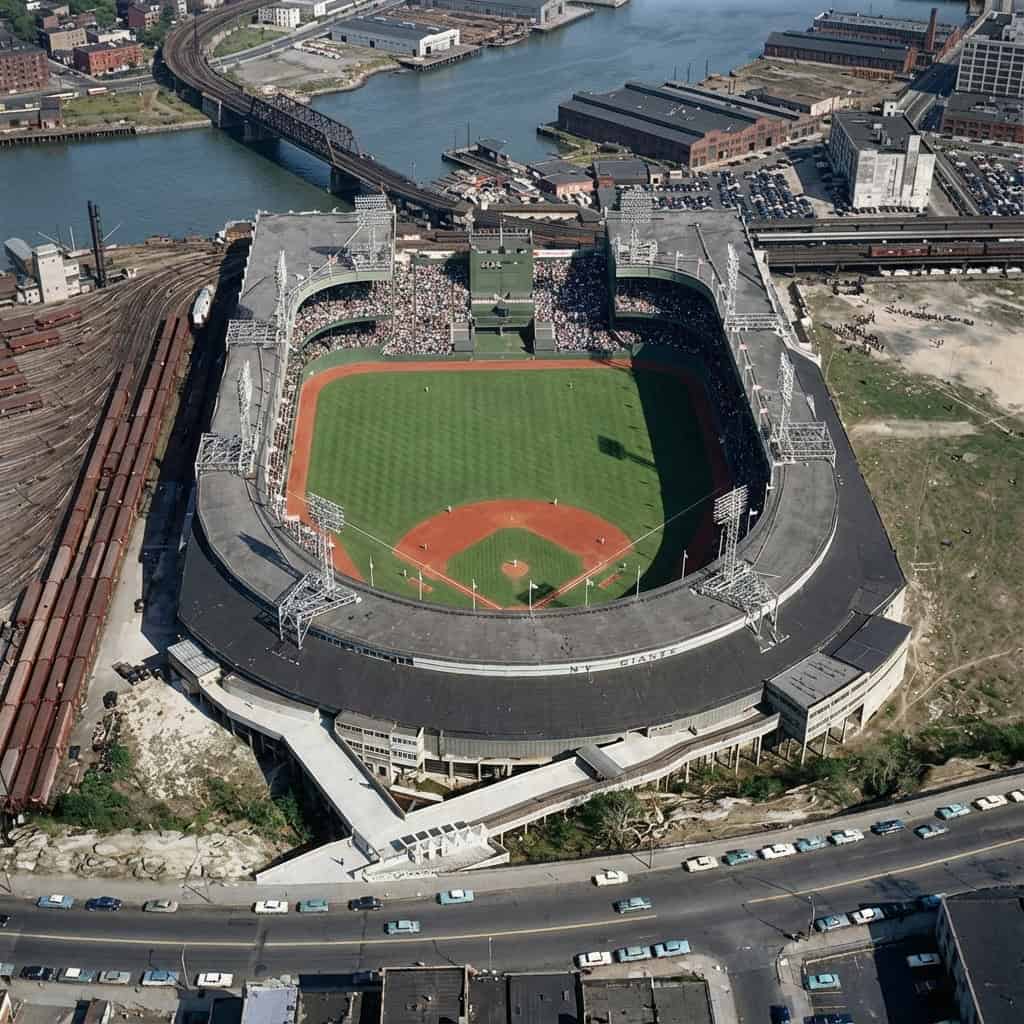
No stadium was more schizophrenic than the Polo Grounds. Down the lines it was a joke—279 feet to left, 258 feet to right.
Center field? 483 feet of pure sadness.
They called the cheap homers “Chinese home runs” because they’d be lazy pop-ups anywhere else. Mel Ott hit 323 of his 511 career homers there, and people never let him forget it.
But hit one to the power alleys and you needed a visa. Only four players in history ever homered into the center field bleachers.
Luke Easter launched one 490 feet in a Negro Leagues game. The rest of the time, center fielders played so deep they practically needed walkie-talkies to communicate with the infield.
6. The LA Coliseum’s 40-Foot Screen and “Moon Shots”
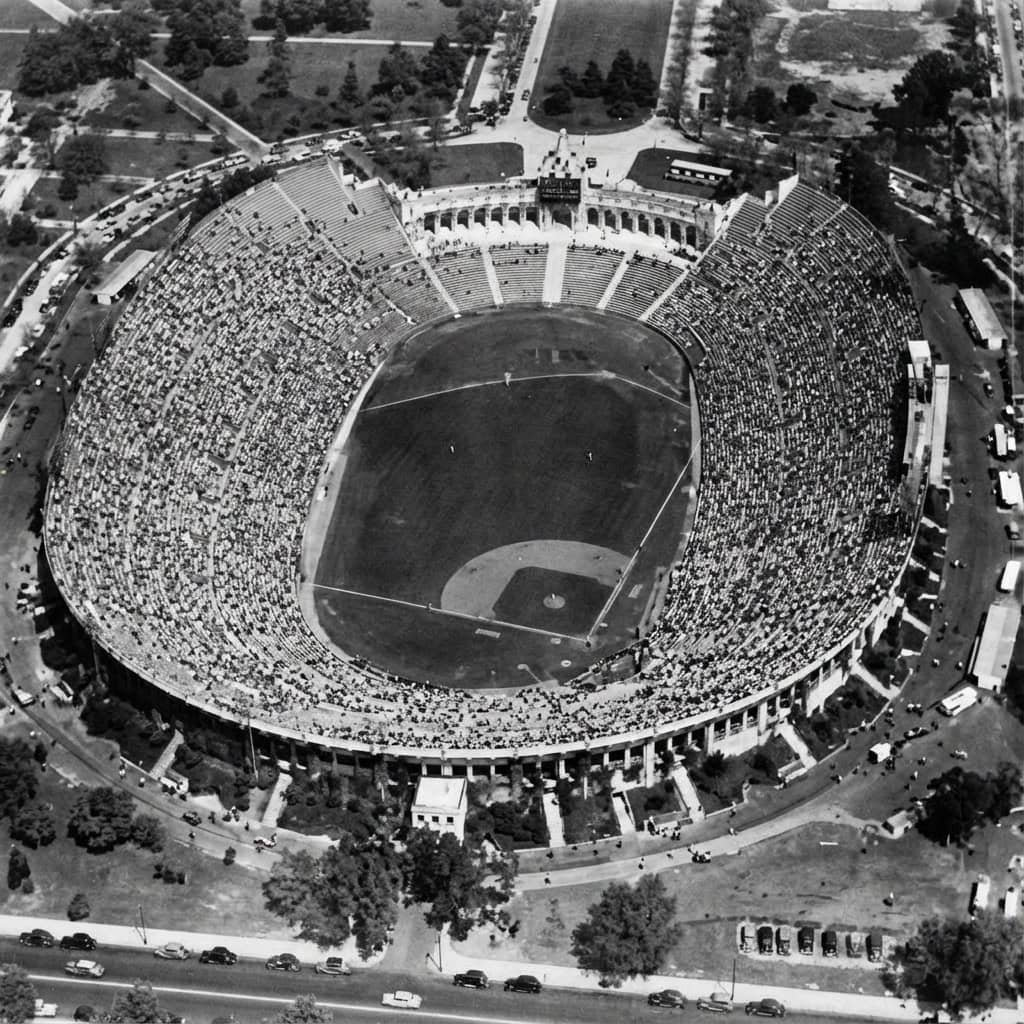
Before Dodger Stadium existed, the Dodgers played in a football stadium. This went exactly as well as you’d expect.
Left field was 250 feet from home plate. To prevent complete chaos, they erected a 40-foot screen.
Routine pop-ups became home runs. Wally Moon learned to slice high fly balls over it, and sportswriters called them “Moon Shots.”
It was a farce. It was hilarious.
It forced MLB to finally write rules about minimum distances. Because sometimes you need to protect baseball from itself.
7. The Overhang That Made Physics Optional
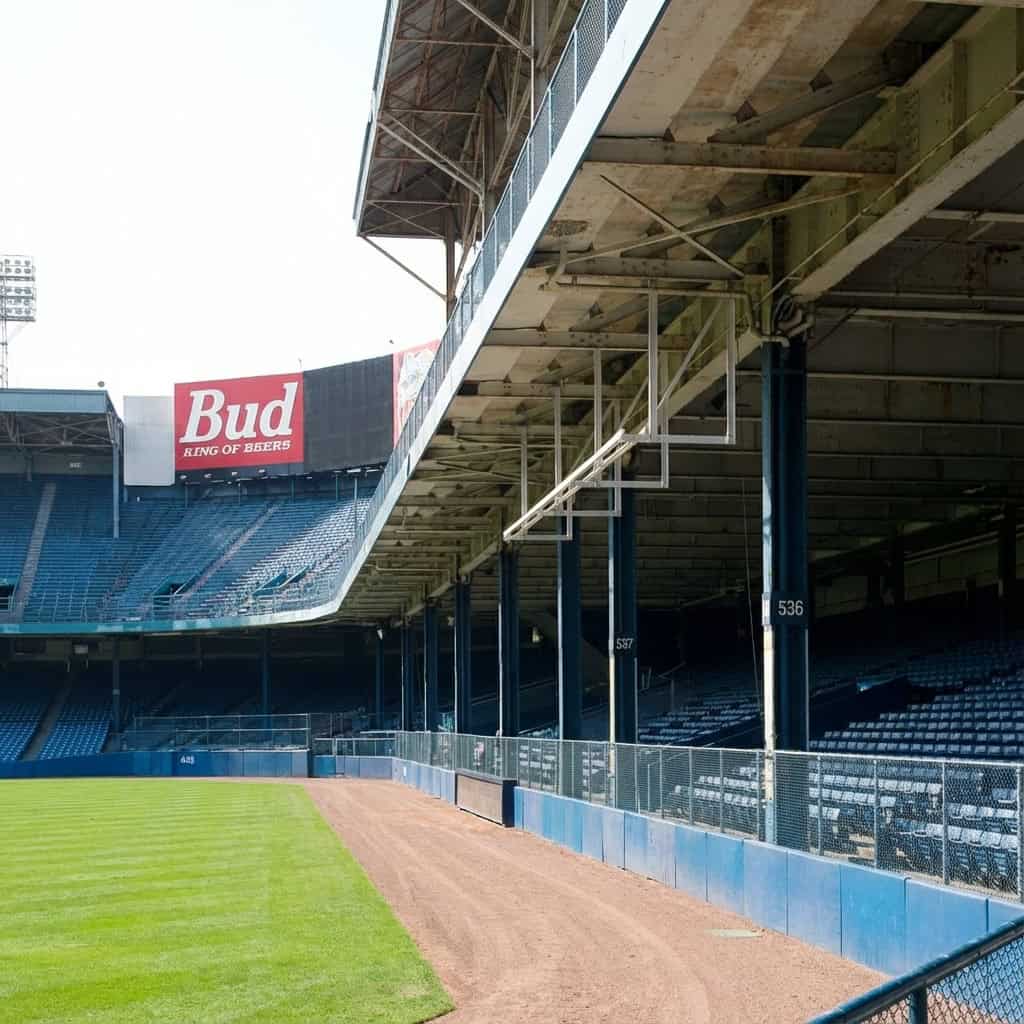
Tiger Stadium had an upper deck that jutted out over the field in right field. A ball that didn’t quite have home run distance could hit that overhang and become a homer anyway.
It was like a cheat code. A reward for trying.
Al Kaline crashed into those overhanging seats so many times chasing pop flies that they eventually removed some of them. Apparently sacrificing your star player’s face for quirky architecture has limits.
8. Dead Zones Where Baseball Went to Disappear
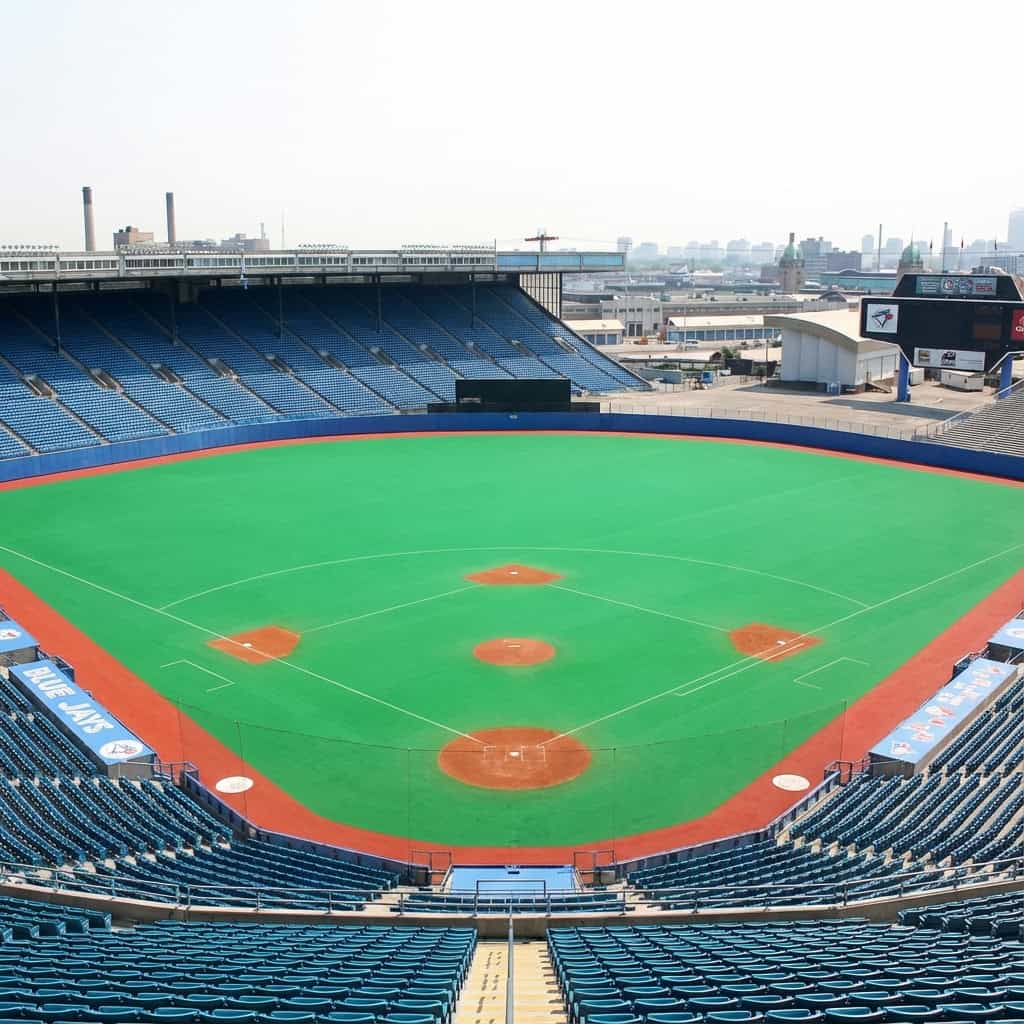
Multi-purpose stadiums tried to be everything. They ended up being nothing.
Massive sections would just sit there, empty and curtained off. Cleveland Stadium and Exhibition Stadium had outfields that went back so far for football that baseball looked like it was being played in an aircraft hangar.
The Metrodome literally hung curtains over sections of seats. Out of sight, out of mind.
These weren’t parks. They were compromises wearing stadium costumes.
9. Ebbets Field’s Concave Wall That Played Mind Games

Ebbets Field’s right field wall wasn’t just close—it was weird. The bottom 10 feet angled outward, the top angled back.
A ball hitting the lower section would carom upward. A ball hitting the upper concrete would drop dead or kick back violently.
Carl Furillo mastered that wall through endless repetition. He learned every dead spot and live spot like a pianist knows their keys.
Visiting outfielders looked like they were playing pinball. Furillo looked like he was conducting an orchestra.
10. Griffith Stadium’s Right-Angle Wall Because Property Rights
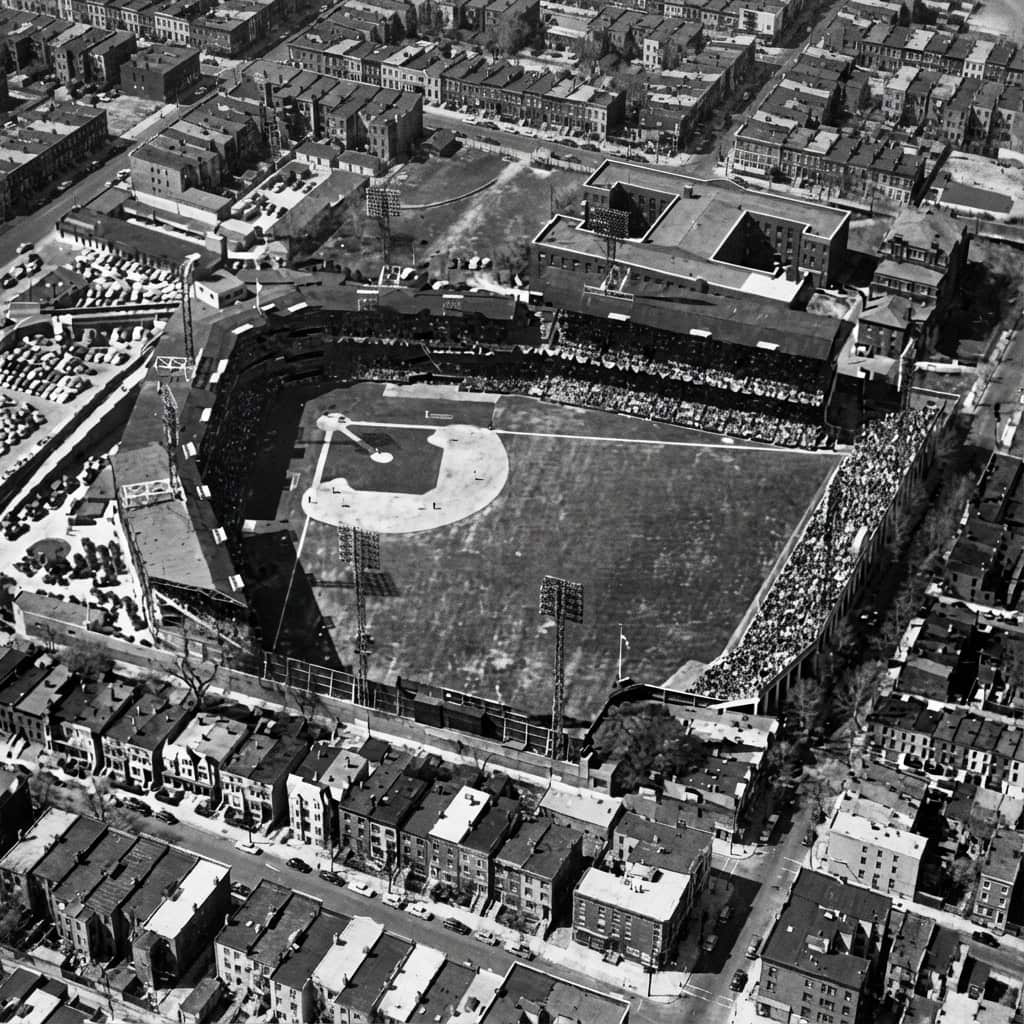
Griffith Stadium’s center field fence had a bizarre 90-degree jut that intruded into the field. This wasn’t design—it was defeat.
Five homeowners and their massive oak tree refused to sell. So the team built the wall around them.
Center fielders had to navigate a blind corner while tracking fly balls. The homeowners watched games for free from their backyards.
The tree loomed over the 30-foot fence. Property rights won.
Baseball adapted.
11. In-Play Bullpens Where Relief Pitchers Became Obstacles

The Polo Grounds had bullpens literally on the field in left-center and right-center. Relief pitchers sat on benches in fair territory watching the game.
Outfielders tracking fly balls had to dodge warm-up mounds, benches, and scattering pitchers. A ball hit into the bullpen stayed live.
Imagine chasing a liner while seven relievers scatter like pigeons. That was Tuesday at the Polo Grounds.
12. The Batting Cage That Never Left the Field
Forbes Field stored their batting cage in deep center field during games. Against the wall. In play.
It sat there at 457 feet, folded but not removed. Just chilling.
A ball could theoretically roll into it while runners circled the bases. The cage probably saw more action than some backup catchers.
13. Obstructed View Seats: Pay Full Price to See Nothing

Old stadiums had massive steel support columns holding up the upper decks. And they sold seats directly behind them.
You’d pay full price to watch a game through a 12-inch gap. Or spend nine innings leaning into the aisle while the guy next to you elbowed you back.
Tiger Stadium was famous for this. People bought those tickets anyway because being at the game beat staying home.
Even if “being at the game” meant imagining most of it. The crack of the bat, the roar of the crowd, and your view of a riveted steel column.
14. The Tree That Played Center Field

Ponce de Leon Park in Atlanta had a massive magnolia tree in deep center field. In play.
Not near the field. Not behind the fence. In the field.
Only legends like Babe Ruth and Eddie Mathews reportedly hit balls into its branches. Everyone else just had to play around it like it was a particularly stubborn teammate who refused to move.
The tree outlasted the stadium. It’s still there, standing in a parking lot, having won the ultimate game of chicken with baseball.
15. The Spite Fence: When Owners Got Petty

Shibe Park had a problem. Neighbors were watching games for free from their rooftops and charging admission.
So the team built a fence over 30 feet high. Purely out of spite.
They called it exactly that—the “spite fence.” Its only purpose was to block the view and make sure if anyone was making money off baseball, it was going to be the team.
The neighbors lost. The fence won.
Baseball has always been about tradition, and few traditions are stronger than petty vindictiveness.
16. Bill Veeck’s Movable Fence Con Job
Cleveland owner Bill Veeck was a showman and a hustler. He installed a portable fence in center field at Municipal Stadium.
Then he’d move it in or out depending on who was visiting. Yankees bringing their sluggers? Push it back to 470.
Light-hitting team in town? Bring it in to 410. It was genius. It was completely unfair.
The American League eventually banned it. Apparently there are limits to creative interpretation of the rules.
But for a while, Veeck weaponized geometry itself. That’s how you know it was a better era.
17. Baker Bowl’s Hump: The Ridge Nobody Asked For
A railroad tunnel ran under Baker Bowl’s outfield. Engineers couldn’t level the field properly, so they didn’t.
A raised ridge called “The Hump” ran through center field. Outfielders could lose sight of the infield running over it.
It was like playing baseball on a halfpipe. Except the halfpipe was made of dirt and grass and could end your season if you hit it wrong.
The Hump stayed until the park closed in 1938. Because fixing it would cost money, and the Phillies were allergic to spending money.
18. Free Seats for Anyone Willing to Get Creative

Corporate luxury boxes didn’t exist. Neither did $400 tickets.
But if you lived near a ballpark, you could watch for free. Rooftops, street corners, apartment windows—anything with a sightline became a seat.
The Wrigley Rooftops are the last vestige of this era. But they’re regulated now, corporate, sanitized.
Back then it was pure. People grilling on their roof with a beer, watching the Cubs lose while the afternoon sun painted everything gold.
At Forbes Field, you could watch from the Cathedral of Learning. Kids pressed their faces against knotholes in outfield walls, catching glimpses between innings.
They called themselves the “Knothole Gang.” A whole generation fell in love with baseball through a crack in a fence.
The Beautiful, Chaotic Truth
These ballparks weren’t built for TV broadcasts or Instagram. They were built for neighborhoods.
Squeezed between bakeries and rail lines. Shaped by stubborn property owners and broke team owners who couldn’t afford to do it “right.”
And that made them perfect.
Because baseball at its best isn’t sterile. It’s not symmetrical.
It’s messy and human and shaped by accidents. It’s the sound of a ball clanging off a tin wall.
It’s the sight of an outfielder tumbling down a hill. The shared gasp when a ball disappears behind a monument.
It’s knowing that a home run at your park means something different than anywhere else. The old ballparks are mostly gone now.
Replaced by beautiful stadiums with perfect sightlines and no obstructed views. Walls that sit at precisely regulated distances.
They’re better in every measurable way.
But they’ll never make you feel the way a 60-foot tin wall in right field did. They’ll never give you a story about the time a guy ran into a flagpole, or when someone’s inside-the-park homer was courtesy of three Hall of Famers refusing to move.
Baseball lost something when it got perfect. It lost the beautiful chaos that comes from playing a game in spaces that were never meant to contain it.
And every time you see Fenway’s Green Monster or walk past the spot where Tiger Stadium used to stand, you remember. This game used to be completely bonkers.
And it was glorious.